
If you’ve been following me at all over the years, you know that I’m a bit obsessed about the thyroid, and the thyroid system, more generally.
The reason for this is because of how critical your thyroid system is to your health.
Energy, body weight, body temperature, hair growth, digestion, and a healthy immune system all depend on a functioning set of hormones made by the thyroid.
With that in mind, what can you do to make sure your thyroid is in top shape?
We all know that nutrition is a major priority when it comes to health. It’s no different with your thyroid.
In my previous article, I discussed some of the most important vitamins and minerals needed by the thyroid system. It included some of the best food sources of these nutrients.
This week, I’d like to look at how sometimes food can work against you.
What I mean is: what foods are best to avoid if you have a thyroid problem or want to prevent yourself developing one?
For those that are new to this, let’s first review what the thyroid is and how it can run into trouble.
What Is The Thyroid?
Your thyroid is a small butterfly-shaped gland located near the base of your neck and is part of your endocrine system.
The main purpose of your thyroid gland is to create thyroid hormones, whose role is to regulate your metabolism, which essentially means everything that happens in the body.
Your thyroid knows to secrete hormones into your bloodstream when it receives a chemical signal known as TSH, or thyroid-stimulating hormone.
TSH is sent from your pituitary gland, which is located at the base of your brain.
Thyroid hormones play an essential role in maintaining your heart rate, energy, digestion, mood, muscle control, and bone strength. They also help your body regulate its temperature and weight.

What Is Hypothyroidism?
Hypothyroidism is a condition in which your body under-produces thyroid hormones.
There are two types of this condition: primary and secondary hypothyroidism.
Primary hypothyroidism occurs when your thyroid gland doesn’t release thyroid hormones like it should, even when adequate TSH is present.
This kind of hypothyroidism can be caused by several factors, including iodine deficiency, genetic disorders, certain medications, and thyroid surgery.
Many individuals with primary hypothyroidism experience this condition because of an autoimmune disease called Hashimoto’s thyroiditis.
Secondary hypothyroidism occurs due to a lack of TSH, which is an issue with the pituitary gland’s function.
There is also a condition, sometimes referred to as Wilson’s Temperature Syndrome (WTS), which involves the overall thyroid system (thyroid, adrenal glands, pituitary gland, hypothalamus, liver, kidneys, and various other organs and tissues).
In WTS, the thyroid hormones are produced normally by the thyroid gland, but they are not metabolized properly by the body. This can also result in hypothyroid symptoms.
Due to the multiple crucial functions of thyroid hormones, the signs and symptoms of this condition affect numerous systems of your body.
Symptoms and signs of hypothyroidism include:
- Chronic fatigue
- Dry skin
- Weight gain
- Increased cold sensitivity and low body temperature
- Muscle weakness, aches, stiffness, and tenderness
- Hair Loss
- Slow heart rate
- Elevated blood cholesterol
- Irregular menstruation
- Enlarged thyroid gland
Five Foods That May Be Harmful To Your Thyroid
When we think of food and the thyroid, it’s usually in the context of which foods are good for your thyroid.
However, there are a few foods that may have a negative impact on thyroid system function.
Foods may do this by:
- Directly interfering with thyroid hormone synthesis or function
- Binding up nutrients required by the thyroid
- Creating inflammation in the thyroid
Some foods may act against your thyroid system in more than one way.
Let’s look at some of the most common potentially anti-thyroid foods and examine just how they exert their effects.
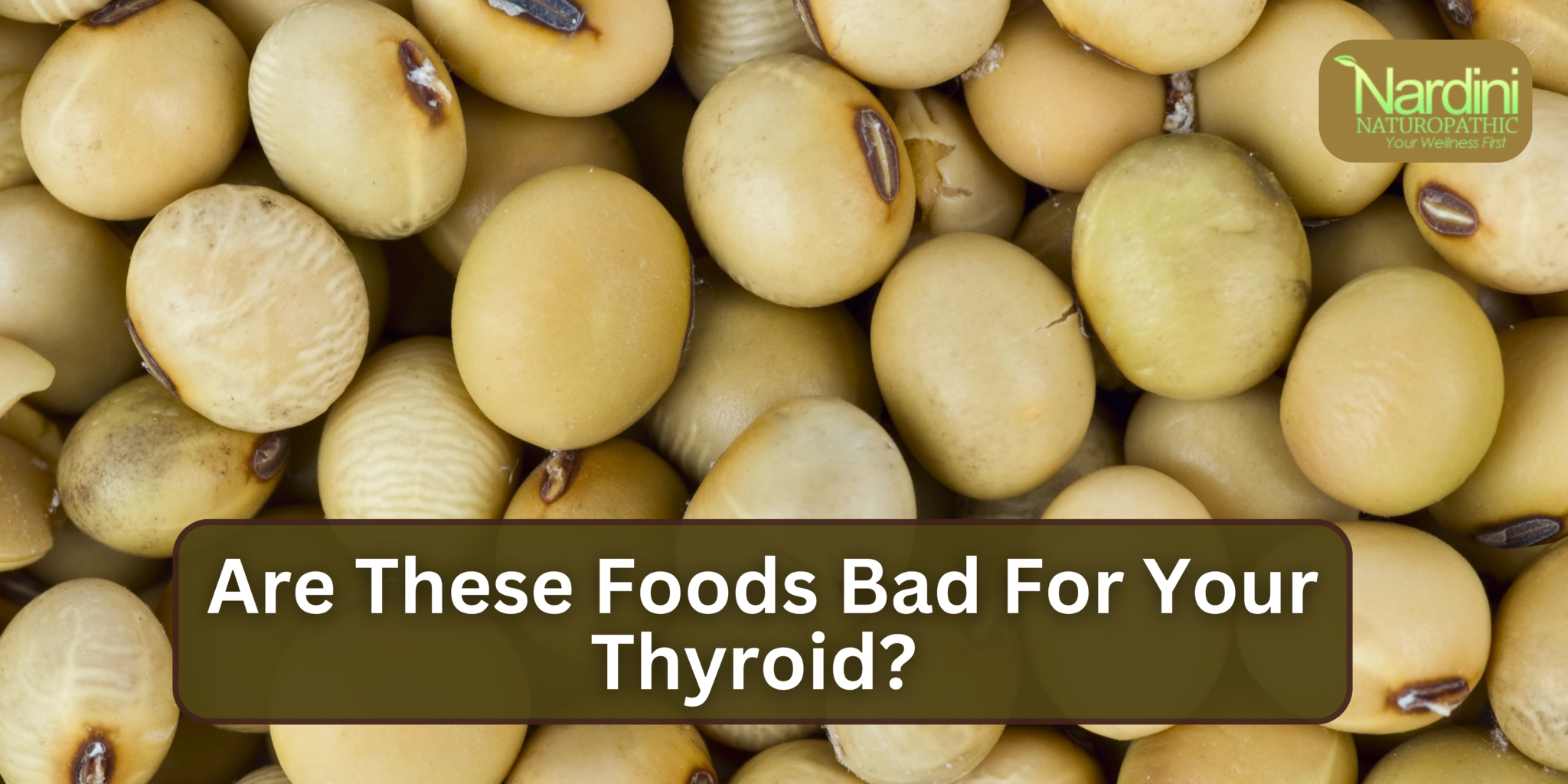
1. Soy
There’s been a lot said and written about the health benefits of soy – it’s potential to help the heart, manage menopausal symptoms, and reduce the risk of certain cancers.
Soy comes in many forms, including:
- Soy milk
- Tofu
- Soy sauce
- Tempeh
- Edamame (soy beans)
- Miso
However, is there anything you should be concerned about when you’re about to tie into that chunk of tofu? When it comes to your thyroid, it may well be.
Soy is a potential problem for anyone dealing with thyroid issues as it’s considered by some to be a “goitrogen”, that is, a substance that causes a swelling of the thyroid gland known as goiter. This is often accompanied by a lowering of thyroid function.
This effect on the thyroid is thought to be related to certain compounds found in soy called phytoestrogens (plant-based estrogen-like molecules). These are the ones that are believed to impart soy with its potential healing properties. However, when it comes to the thyroid, these phytoestrogens may not be so good.
The primary phytoestrogens in soy to consider for their potential anti-thyroid effects are isoflavones called daidzein and genistein. Studies demonstrate that these compounds inhibit the enzyme thyroid peroxidase, which is necessary to produce T4 hormone by the thyroid gland1.
According to a research study published in 2008, university students consuming soybeans over a 7-day period had higher levels of the phytoestrogens in their blood by the end, as expected. However, their levels of thyroid stimulating hormone (TSH), T4 thyroid hormone, and T3 thyroid hormone showed various changes suggestive of lowered thyroid function2.
Other research is somewhat unclear regarding the long-term effects of soy on the thyroid gland. Some suggest a lowering of thyroid hormones; others don’t.
The take home message here is: if you suspect you have a thyroid problem, consider limiting your soy intake. Small amounts might be alright, but regular soy consumption could negatively impact your thyroid hormones.
If you do consume soy, fermented forms, like tempeh and miso, tend to be better choices as they are often easier to digest.
2. Casava
Casava is a tropical shrub native to Brazil. Its tubers are used to make tapioca starch, a staple food in many countries. The food industry commonly uses it as a thickening agent in processed foods.
Foods containing tapioca include:
- Tapioca pudding
- Bubble tea
- Gluten free breads and pastries
- Soups
- Sauces and gravies
The potential problem with casava and the thyroid is a goitrogenic compound it contains called linamarin, a cyanogenic glucoside which contains cyanide3.
Although casava is chemically treated prior to its use for human consumption, much of the goitrogenic compounds may remain, which may harm thyroid function.
When cassava is consumed, the liver metabolizes the linamarin into thiocyanate, which, like soy, interferes with the enzyme thyroid peroxidase – the enzyme is responsible for integrating iodine into thyroid hormones.
A 2016 study in India demonstrated an association between tapioca consumption and hypothyroidism, including those diagnosed with Hashimoto’s thyroiditis3.
So, eating large amounts of casava in the form of tapioca may lead to hypothyroidism.
If you’re concerned about your thyroid, it’s probably wise to limit your tapioca intake.
3. Gluten
Gluten is a component of wheat and many other cereal grains like rye, spelt, kamut, and barley. Its stickiness (like glue) makes it great for baking, because it helps keep your bread together.
Foods containing gluten include:
- Grains
- Bread
- Pasta and noodles
- Pastries
- Sauces and condiments
- Processed snacks
- Beer
Gluten is made up of two protein-containing fractions – gliadin and glutenin. Many experts believe the gliadin portion is the cause of most sensitivities to gluten, but glutenin may also play a role.
Some estimate that up to a third of the US population is sensitive to gluten based on the presence of antibodies to gluten in the blood or stool4. But there’s more to it than that!
When the immune system makes antibodies to the gluten, the antibodies sometimes “mistake” their own body for the gluten and attack it. An alternative explanation is that the body may just be a victim of collateral damage from an inflammatory reaction to the gluten.
A prime example of this is an autoimmune condition known as Celiac disease which can lead to symptoms like gas, bloating, abdominal pain, diarrhea, skin and joint inflammation, and “brain fog”.
But some will get these same symptoms from gluten without having Celiac disease. These people may be considered to have a “gluten intolerance”, but the symptoms can be just as severe.
Celiac disease and gluten intolerance certainly cause inflammatory reactions in the digestive tract, causing the digestive symptoms that I mentioned earlier.
When you damage your digestive tract, it’s like going on vacation with your front door open. It can lead to something called “leaky gut syndrome”5.
Undigested food particles, including the gluten, can pass through your damaged intestinal barrier and cause inflammatory reactions in other parts of the body, like the airways, joints, skin, brain, and even your thyroid6.
Your thyroid might seem like the farthest thing away from your digestive tract, but they’re intimately connected.
If you have Celiac disease or a gluten intolerance, there’s a chance your thyroid is being impacted. In fact, many people with autoimmune thyroid conditions, like Hashimoto’s thyroiditis and Graves’ disease, have anti-gluten antibodies in their blood7.
It’s possible to get tested for Celiac disease and even gluten intolerance. A positive anti-tissue transglutaminase antibody test is usually enough to diagnose Celiac disease. Gluten intolerance can sometimes be detected by testing the blood or the stool for anti-gluten antibodies.
If you test positive for antibodies against gluten, it’s crucial to remove gluten from your diet.
But testing isn’t always conclusive. In my opinion, the best way to test for gluten intolerance is to remove gluten completely from the diet for at least 3 months. Even a small amount of gluten can trigger antibody production and perpetuate the inflammatory reaction, so really, it’s ALL gotta go!
If you have a history of thyroid disease, this is an important part of discovering the cause(s) of it. If your thyroid problems are at least partly due to gluten intolerance, symptoms often improve after eliminating gluten.
At least one study with Celiac patients that also had hypothyroidism has shown this to be the case8.


4. Caffeinated Beverages
Although there are potential health benefits to drinking coffee and tea, there are certainly some drawbacks to drinking these and other caffeinated beverages.
Foods and beverages which contain caffeine include:
- Coffee
- Tea (black, green, oolong, and white varieties)
- Chocolate (including cocoa and cacao)
- Kola nut
- Guarana
- Sodas
- Energy Bars
- Desserts
A typical cup of coffee has anywhere from 65 to 120 mg of caffeine in it. A decaf coffee has 2-4 mg, and green or black tea has around 30-50 mg.
Caffeine is the stuff that gives you that energy boost when you have a cup. From a biological level, caffeine stimulates your adrenal glands and tells them to create cortisol and adrenaline.
The adrenaline increases your heart and respiration rate as well as blood pressure, which delivers more blood to your brain and muscles, and increases your alertness and energy. Meanwhile, the cortisol increases your blood sugar, making more fuel available to your brain, blood cells, and muscles. That’s where your caffeine boost comes from.
One of the biggest drawbacks to caffeine is the effect it can have on your thyroid.
Caffeine has been shown to raise your cortisol levels, as we mentioned above. And cortisol can slow down the conversion of T4 thyroid hormone into T3 thyroid hormone.
T3 is 4-5 times more active than T4 in stimulating your body’s metabolism, so reducing your T3 levels can cause fatigue, low body temperature, depression, hair loss, and weight gain.
This is why regular caffeine consumers feel better after the caffeine, but their overall energy levels are low.
And while elevated cortisol levels have their issues, elevated adrenaline levels can be dangerous as well. Symptoms of anxiety, like heart palpitations, racing thoughts, shaking, and shortness of breath have been linked to elevated adrenaline levels.
Over time, elevated cortisol and adrenaline may lead to problems with blood sugar regulation and even diabetes.
Caffeine may also contribute to other health issues like anxiety, insomnia, and digestive problems, not to mention that it can be addictive.
If you want to keep your thyroid and your whole body as healthy as you can, it’s crucial not to overdo caffeine and may even be helpful to avoid it entirely for a time.
5. Processed Foods
It may be a stretch to call some of these items “food”, but there are many fast and convenient, pre-packaged foods in the grocery store that could have a negative impact on your whole body, not to mention your thyroid.
I’m not talking about a can of sardines that has three ingredients.
What I’m referring to usually contain a long list of ingredients, including many you can’t pronounce, and are sometimes referred to as “ultra-processed foods”.
Some popular ultra-processed foods include:
- Baked goods
- Luncheon meats
- Ready meals
- Packaged snacks
- Sodas and energy drinks
- Confectionary items
- Fast Food
You may have noticed that some of these items appeared on one of the previous lists.
There are multiple problems with these foods: they may contain a lot of sugar, trans-fats, denatured proteins, excess salt, artificial flavourings, and chemical preservatives.
Some also contain gluten and caffeine as we covered earlier.
On top of that, these ultra-processed foods are designed to be hyper-palatable, meaning that they taste good and trigger cravings for more. This is great for selling more product, but not so good for your body.
Some additives contained in processed foods may be especially bad for your thyroid.
Erythrosine, aka FD&C Red No. 3, is a colouring agent added to a variety of foods, including candies, icings, fruit fillings, soft drinks, ice cream, milk shakes, and sausages to make them appear red. It is also present in pharmaceutical tablets and capsules, and cosmetics, such as lipstick and blush.
It works against your thyroid system by inhibiting the uptake of iodine by the thyroid gland and it also interferes with the conversion of T4 to T39.
Bromine is a halogen that can substitute for iodine in the body and has been shown in research to elevate TSH levels10. This finding suggests that bromine may contribute to hypothyroidism.
Bromine is found in commercially prepared breads, citrus-flavoured soft drinks, hair care products, pool disinfectants, and flame-retardants.
Artificial Sweeteners, like aspartame and sucralose, may be toxic to the nervous system and gut, both of which impact the thyroid system.
There are many other food additives that may have an indirect effect on the thyroid system.
Again, if there’s an ingredient in your food that you can’t pronounce, you may want to think twice before consuming it.
What About The Cabbage Family?
All over the internet, you can find references to how cruciferous (cabbage family) vegetables are goitrogenic.
Cruciferous veggies are classified as goitrogens based on speculation and on one study, done on animals in 198311.
The animals that were fed large amounts of cruciferous vegetables had an increased incidence of hypothyroidism (underactive thyroid). What is often not mentioned is that this only occurred with animals which had a deficiency in iodine in the first place!
Animals with normal iodine levels did not get hypothyroidism, even with high cruciferous consumption.
Further studies in humans have not been able to demonstrate increased risk of goiter or thyroid cancer from high cruciferous intake12.
And Iodine?
Although iodine is an essential nutrient for thyroid hormone production, there is a case to be made that it’s possible to get too much of it.
Those with pre-existing thyroid conditions such as Graves’ disease are especially at risk for iodine-induced hyperthyroidism (over-active thyroid).
Symptoms of hyperthyroidism include sudden weight loss, excessive sweating, anxiety and depression, insomnia, and increased appetite.
If you are worried that you might be suffering from an over-active thyroid and want to know whether you should take iodine, consider seeing a qualified health practitioner who can walk you through the benefits and risks.
Final Words
Your thyroid is an important part of your body’s endocrine system. It determines how much energy you have and how much weight you carry. If you don’t take care of it, your health will suffer.
There are many ways to support your thyroid. Supporting your thyroid with good nutrition is the first step.
Above all, make sure that you’re not working against your thyroid, by eating something that might be poisoning it!
- https://www.sciencedirect.com/science/article/abs/pii/S0006295297003018?via%3Dihub
- https://pubmed.ncbi.nlm.nih.gov/18624607/
- https://www.jebmh.com/articles/a-study-on-cassava-tapioca-causing-hypothyroidism.pdf.pdf
- http://www.celiac.com/articles/8/1/What-is-gluten-What-is-gliadin/Page1.html
- https://cdhf.ca/en/what-is-leaky-gut-syndrome/
- https://www.huffpost.com/entry/gluten-impacts-the-brain_b_785901
- http://www.ncbi.nlm.nih.gov/pubmed/9872614
- https://pubmed.ncbi.nlm.nih.gov/10461017/
- https://pubmed.ncbi.nlm.nih.gov/2675279/
- https://www.ncbi.nlm.nih.gov/pmc/articles/PMC501258/
- http://www.sciencedirect.com/science/article/pii/0308814683900742
- http://link.springer.com/article/10.1023%2FA%3A1020243527152
Book An Appointment With Nardini Naturopathic
Are you interested to find out how certain diet changes could help your thyroid?
Or perhaps you’d like a review of your overall diet to see where you could be doing better.
Maybe you have food allergies or intolerances and worry you aren’t getting enough nutrients because of your restricted diet.
I’m Dr. Pat Nardini, a naturopathic doctor who offers nutritional counseling services to help ensure all of those gaps in your diet are filled, and that you’re getting enough of all the important nutrients which your body needs to function at its best.
Contact me today for more information, or book a free 15-minute consultation where I will help you understand how naturopathic medicine can help you.
If you have questions about naturopathic medicine, or you’d like to take your first step into the world of naturopathy, contact us at Nardini Naturopathic, and let’s book an appointment.
Yours in health,
Dr. Pat Nardini, Naturopathic Doctor
320 Danforth Ave suite 206,
Toronto, ON, M4K 1N8
-https://g.page/NardiniNaturopathicDanforth
Dr. Pat Nardini, ND is a licensed doctor of naturopathic medicine in Toronto, Ontario. He offers science based natural health solutions with a special focus on thyroid conditions.