
If you’ve been following my posts at all, you’ll know that I have a special focus on thyroid health. And you’ll understand that there are many ways in which the thyroid system can get out of balance.
Let’s consider some of the main reasons.
Nutrition
Nutritional deficiencies are one example of something that can cause havoc with the thyroid. The thyroid system requires several nutrients to run efficiently. A deficiency in any one of them may lead to imbalanced thyroid function and the symptoms associated with that.
Toxins
Like all organs in the body, the thyroid gland can be affected by various toxins. When the thyroid gland is intoxicated, its function is often impaired. Since this gland is so important to health, it’s worthwhile to keep the thyroid detoxified of any chemicals or other factors that may be impairing it.
Stress
Stress slows your metabolism, which is why stress is linked to weight gain and fatigue. The slow metabolism is largely because of stress’ effect of lowering thyroid hormone production and function.
When under stress, the body is less able to make the active thyroid hormone, T3, from its precursor hormone, T4. Since you need T3 to have a normal metabolism, having less T3 can slow that metabolism down.
So, with all these factors which can negatively impact your thyroid, how can we possibly deal with it?
Luckily, there may be an answer.
Let’s look at the potential of botanical medicine to detox, nourish, and support the thyroid gland and the thyroid system.
How Can Herbs Help Your Thyroid?
Botanical medicine refers to the medicinal properties of natural plant material.
You may have used the term herbal medicine before – it’s the same thing, but because it’s more than just a plant’s herbs that have medicinal properties, we prefer the term botanical medicine.
This may include the leaves, stems, flowers, seeds, or roots, which varies as each plant part has different healing properties.
Although, technically not plants, mushrooms and other fungal parts are often considered to be like botanical medicine when used for their healing properties.
Of course, the benefits of botanical medicine vary depending on which plant you’re using.
Botanical remedies can help with sleep, anxiety & depression, chronic pain, gastrointestinal issues, and more — you name it, there’s a plant for it.
Today, let’s look at five of the best botanical medicines for your thyroid system.


1. Ashwagandha
Ashwagandha (Withania somnifera) is a plant from the nightshade family which grows in India, China, and Nepal1.
That means it’s related to other nightshade plants such as potatoes, tomatoes, bell peppers, eggplant, and surprisingly, tobacco.
Traditional Indian medicine, also known as Ayurveda, has used Ashwagandha as a treatment for centuries.
Withania primarily assists the thyroid system through its action as an adaptogen – it assists the body to keep hormone levels in balance and to respond to stress.
When you’re stressed, the adrenal glands release a hormone called cortisol, which, in the short term, helps you to respond to stressors. Long term, however, too much stress can lead to sustained elevated levels of cortisol, resulting in fat storage in the abdomen and high blood sugar levels.
A study published in 2012 found that participants with chronic stress who were given high-concentration full-spectrum Ashwagandha root extract showed a significant reduction in stress levels in addition to reduced cortisol levels2.
As mentioned above, stress can negatively impact the thyroid system by reducing the conversion of T4 thyroid hormone into active T3 thyroid hormone. This can lead to a condition of the thyroid system known as Wilson’s Temperature Syndrome – the lab tests may look alright but you have the symptoms of an under-active thyroid.
If your thyroid doesn’t produce enough thyroid hormone and/or your body can’t convert it into T3 because of the effects of stress, then thyroid-related functions will suffer. If Ashwagandha can reduce the harmful effects that stress can have, then perhaps the thyroid system will benefit.
In fact, the research strongly suggests this.
A 2018 study in the Journal of Alternative and Contemporary Medicine found that treatment with Ashwagandha over an eight week period resulted in significant increases in the levels of thyroid hormones in test subjects (both T4 and T3)3.
As a result, Ashwagandha may be an effective treatment for an under-active thyroid system.
Ashwagandha has also been shown to reduce inflammation, which may have a general positive effect on thyroid health.
A 2012 study in the Pharmacognosy Journal showed Ashwagandha to possess anti-inflammatory effects in experimental conditions4. A review article published in 2021 concluded that several studies in humans suggest that Ashwagandha may be helpful in the treatment of arthritis5.
More studies need to be done to examine the effects of Ashwagandha on various inflammatory conditions in humans, but results are promising.
2. Bladderwrack
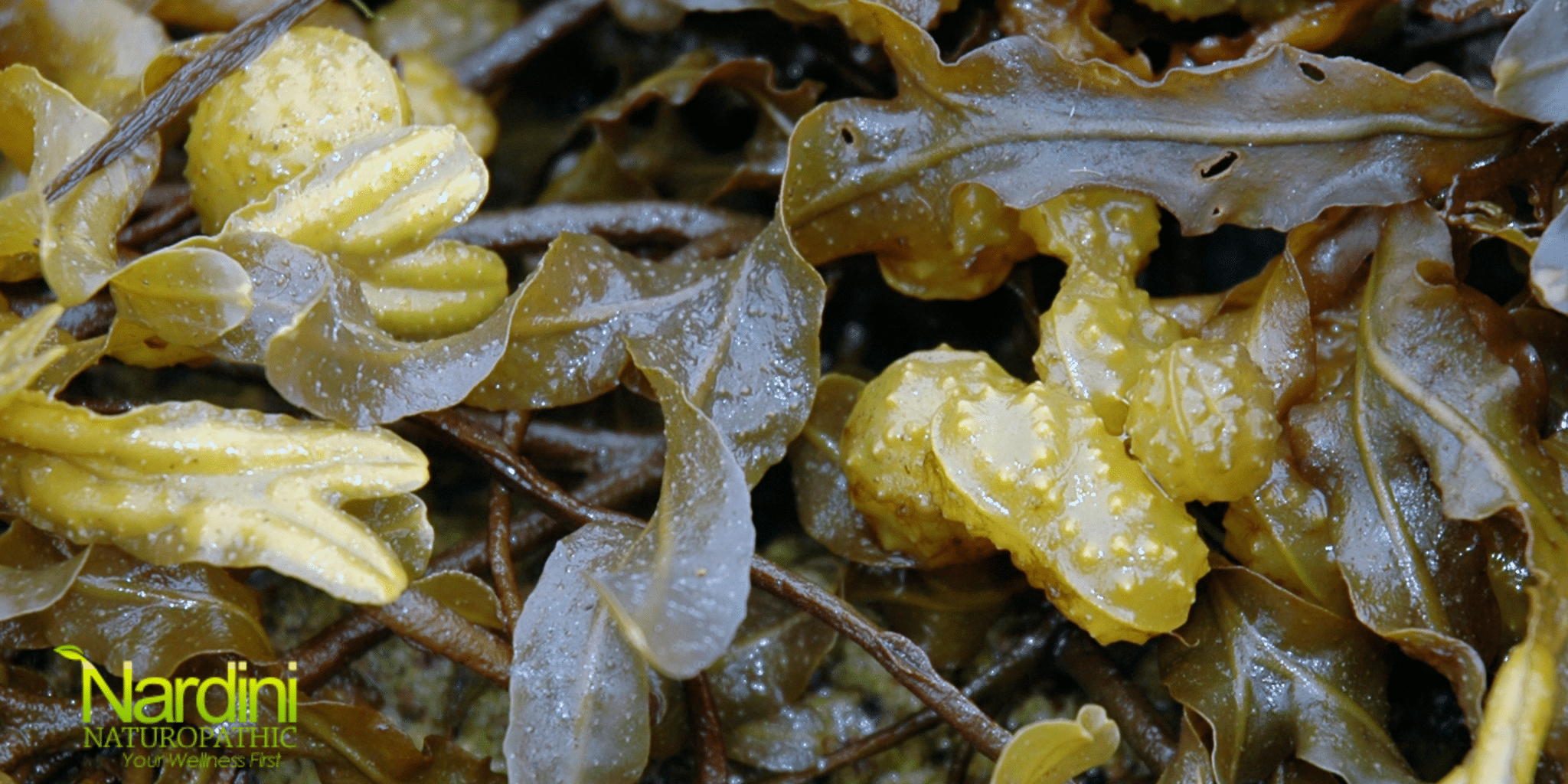
Fucus vesiculosus, aka Bladderwrack, is an edible brown seaweed native to the Baltic Sea, North Sea, and the northern Atlantic and Pacific oceans around Europe and North America6.
Although seaweeds in general have been part of traditional diets for a long time, especially in Asia, consumption of them in western populations has grown over recent decades. This is primarily because of the impressive nutrient content of seaweeds, including Bladderwrack.
Fucus supports the thyroid system by providing nutrients necessary for it to function and keep it detoxified.
The nutrients that Bladderwrack contains include minerals, like calcium, sodium, potassium, magnesium, zinc, iron, and iodine; vitamins, such as Vitamin A and Vitamin C, and Vitamin E; and fibre6. It also contains all nine of the essential amino acids (amino acids that are necessary for the manufacture of protein in the body but must be obtained through the diet)6. All these nutrients will have a direct or indirect effect on thyroid system function.
The antioxidant content of bladderwrack makes it an extremely potent agent in the support of a healthy thyroid. Bladderwrack’s antioxidants include Vitamins A, C, and E plus several other compounds, such as fucoxanthin, phlorotannins, and alginic acid.
Fucoxanthin is a carotenoid (like beta-carotene) that is primarily responsible for Bladderwrack’s brown colour. Research suggests that it may reduce oxidative stress in the body by scavenging reactive oxygen species in the body and by engaging the liver’s Phase II detox pathway6.
As antioxidants, the phlorotannins in bladderwrack show promise for their anti-inflammatory effects7. This activity may be of benefit to those with cardiovascular disease, diabetes, and obesity.
Alginic acid is a natural polysaccharide extracted from brown sea algae as sodium alginate. Long-touted as a health- and longevity-promoting supplement, sodium alginate demonstrates antioxidant, anti-inflammatory, and immuno-modulatory effects in research studies8.
These properties may be extremely beneficial to the thyroid, especially if it’s affected by an autoimmune condition, like Hashimoto’s thyroiditis.
Sodium alginate can also bind heavy metals, like lead, cadmium, and chromium, potentially helping the body to detoxify from such toxic metals. A promising example of this is a 2022 study in rats which demonstrated that sodium alginate can prevent brain damage in animals exposed to toxic levels of chromium9.
All this makes Bladderwrack an intriguing botanical when considering thyroid and whole-body detoxification.
3. Blue Flag Iris
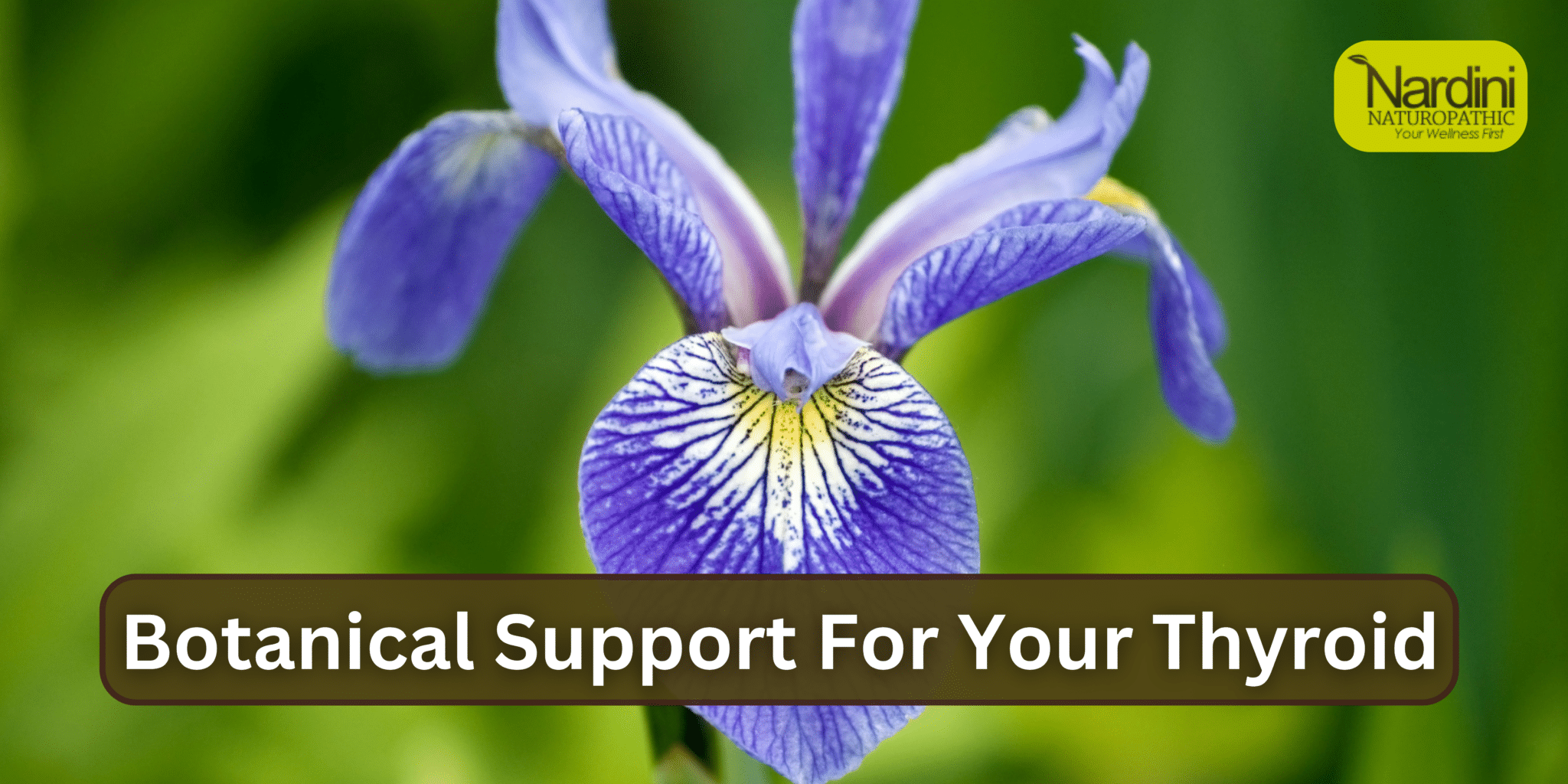
Iris versicolor, or Blue Flag Iris, is a perennial, aquatic plant with distinct blue-purple flowers. It was a traditional herbal medicine used by the “eclectic” physicians (the forerunners of modern naturopaths) in the nineteenth and twentieth centuries for a variety of ailments. These include skin conditions, gastrointestinal problems, liver disorders, and lymphatic congestion10.
Blue Flag Iris contains volatile oils, resins, alkaloids, and the oleoresin known as iridin, but it’s unknown which of these constituents are responsible for the plant’s medicinal properties.
Traditionally and in modern times, Blue Flag Iris is also used to treat thyroid conditions, partly because of its potential benefit to the detox organs, like the liver and lymphatic systems11.
Iris stimulates bile production and secretion through the liver and gallbladder, a critical step in the removal of toxins from the body via the digestive tract. This may explain why Iris versicolor was traditionally used to treat jaundice (yellowing of the skin sometimes caused by liver congestion) and diarrhea.
The lymphatic system may also benefit greatly from the use of Blue Flag Iris. The lymphatic system is a network of vessels throughout your body which transports fluid, called lymph, which often contain toxins to be disposed of.
Iris may promote the flow of the lymph, encouraging the speedy removal of chemicals that could damage the organs, including your thyroid.
Blue Flag Iris has a specific affinity for resolving congestion in the throat and head, which would include the thyroid, of course12. This property would make it extremely helpful for resolving goiter, an enlargement of the thyroid associated with both hypothyroidism and hyperthyroidism. However, hyperthyroid goiter may require several months of treatment with Iris to achieve positive results.
A recent scientific review highlighted the antioxidant potential of Iris due to its constituents like phenolic acids and flavonoids13. If this botanical can help reduce oxidative stress, it would be of great benefit to the thyroid and the body as a whole.
Unfortunately, there is little modern research into the use of Iris as a botanical medicine in humans. Indeed, more studies need to be done to better understand this herb’s potential benefits to the body.
4. Guggul
Commiphora mukul, aka Guggul, is a tree native to Asia that produces a hard resin similar to myrrh gum which has been used in Ayurvedic Medicine and Traditional Chinese Medicine for centuries. Its health applications traditionally include treatment for inflammation, diabetes, rheumatism, arthritis, obesity, and high cholesterol.
This plant contains sterol compounds called guggulsterones which interact with bile receptors in the liver to potentially help lower excess cholesterol levels14. Unfortunately, studies are conflicting regarding whether Commiphora actually lowers cholesterol levels in humans.
However, a study published in 2004 concluded that guggulsterones act as antioxidants to inhibit the oxidation of lipids, which is believed to be the main cause of arterial disease known as atherosclerosis15. This property may be even more important than simply lowering total cholesterol.
Either way, Commiphora mukul may help the body maintain healthy cholesterol by supporting the thyroid’s metabolic functions. Thyroid imbalance, especially hypothyroidism, is associated with higher LDL (so-called “bad cholesterol”) and Lipoprotein (a), both of which are linked to increased cardiovascular disease risk16.
Ketosteroids, another class of molecules contained in Guggul, have been shown in animal studies to increase the uptake of iodine by the thyroid and enhance the activity of thyroid peroxidase enzymes, an important factor in the synthesis of thyroid hormones17.
Even better news is that Commiphora mukul extracts appear to increase T3 levels and improve the ratio of T4 to T314. Since T3 is the active thyroid hormone while T4 is only its precursor, this finding suggests that Guggul has an overall supportive effect on the thyroid system.
Of course, more research needs to be done to fully evaluate Guggul’s effect on cholesterol levels and how it may benefit the human thyroid system.
5. Siberian Ginseng
The botanical name of Siberian Ginseng is Eleutherococcus senticosus (it is also known as Acanthopanax senticosus). Sometimes called just “Eleuthero”, this herb is native to eastern Asia, ranging from Siberia in the north to Vietnam in the south.
Despite its common name, Siberian Ginseng is not actually a true ginseng. It does, however, have similar health benefits to ginseng (Panax ginseng). It’s used medicinally in Traditional Chinese Medicine and has been adopted by western botanical traditions.
Like Ashwagandha, Siberian Ginseng acts as an adaptogen, helping the body to manage the effects of stress.
As an adaptogen, Eleuthero is excellent at giving the body the edge when it comes to stress, both mental and physical. This can be extremely helpful for the thyroid and adrenal glands, as they are particularly important for modulating the body’s stress response.
The effects of stress on the body begin with a short-term alarm phase, then move into a longer-term resistance phase. If the stress continues, an exhaustion phase is the final stage. Siberian ginseng can potentially aid the body during the resistance phase and prevent the exhaustion phase.
Research appears to support this. A study in the elderly showed an improvement in quality-of-life for those supplementing with Eleuthero extract18.
The benefits to the stress response and the other properties of Siberian Ginseng appear to be due mainly to its lignans and iridoid glycoside phytochemicals19. The principle of these are called eleutherosides, Eleutheroside B and Eleutheroside E being the most important.
Reducing stress also helps balance the immune system, which may be of particular benefit to those managing an autoimmune thyroid condition, like Hashimoto’s or Graves’ Disease.
Fatigue is something that most of us experience from time to time. Some of us must deal with chronic fatigue that is always there.
Evidence suggests that Siberian Ginseng can help.
A study performed on people diagnosed with chronic fatigue syndrome showed some symptom improvement over a one-month period for those with mild to moderate fatigue20.
A major factor in determining one’s energy is the quality of their sleep. Siberian Ginseng may have some benefit for those with sleep issues. A study on mice in 2011 demonstrated more normalized sleep patterns in mice given Eleuthero extract21.
There are many other potential benefits to Siberian Ginseng. Research suggests that it can aid with cardiovascular health, drive physical performance, benefit the brain, help to balance blood sugar, and may even have anti-cancer effects.
Final Words
Botanical medicine is exactly what the name suggests — medicine, which means it’s important to do your research on any herb you decide to add to your routine.
Although botanical medicines are generally very safe and well-tolerated, some of them may interact with medications or existing health conditions. Some herbs may even cause allergic reactions with certain individuals.
Consulting with your naturopathic doctor or qualified health practitioner is always recommended before taking a new supplement or medicine.
This is especially the case if you’re pregnant, breastfeeding, about to undergo surgery, have a blood disorder, have low blood pressure, or other pre-existing health condition.
Once you’ve considered all factors, these five herbs may be just the support your thyroid system needs!
- https://en.wikipedia.org/wiki/Solanaceae
- https://pmc.ncbi.nlm.nih.gov/articles/PMC3573577/
- https://pubmed.ncbi.nlm.nih.gov/28829155/
- https://www.sciencedirect.com/science/article/abs/pii/S0975357512800538
- https://pubmed.ncbi.nlm.nih.gov/34144529/
- https://pmc.ncbi.nlm.nih.gov/articles/PMC6117670/
- https://www.sciencedirect.com/science/article/abs/pii/S1756464615001668?via%3Dihub
- https://www.sciencedirect.com/science/article/abs/pii/S0141813020336217
- https://pmc.ncbi.nlm.nih.gov/articles/PMC9009676/.
- https://www.scu.edu.au/analytical-research-laboratory—arl/medicinal-plant-garden/medicinal-plant-monographs/iris-versicolor/
- https://restorativemedicine.org/library/monographs/blue-flag/
- https://www.herbalreality.com/herb/iris/
- https://www.mdpi.com/2076-3921/11/3/526
- https://restorativemedicine.org/journal/promoting-healthy-thyroid-function-with-iodine-bladderwrack-guggul-and-iris/
- https://www.sciencedirect.com/science/article/abs/pii/S0021915003004891
- https://pmc.ncbi.nlm.nih.gov/articles/PMC3109527/
- https://pubmed.ncbi.nlm.nih.gov/15798994/
- https://pubmed.ncbi.nlm.nih.gov/15207399/
- https://pubmed.ncbi.nlm.nih.gov/11749801/
- https://pubmed.ncbi.nlm.nih.gov/14971626/
- https://pubmed.ncbi.nlm.nih.gov/21376030/
Book An Appointment With Nardini Naturopathic
Are you interested to find out if botanical medicine could help your thyroid?
Or perhaps you’d like a review of your overall diet to see where you could be doing better.
Maybe you have food allergies or intolerances and worry you aren’t getting enough nutrients because of your restricted diet.
I’m Dr. Pat Nardini, a naturopathic doctor who offers nutritional counseling services to help ensure all of those gaps in your diet are filled, and that you’re getting enough of all the important nutrients which your body needs to function at its best.
Contact me today for more information, or book a free 15-minute consultation where I will help you understand how naturopathic medicine can help you.
If you have questions about naturopathic medicine, or you’d like to take your first step into the world of naturopathy, contact us at Nardini Naturopathic, and let’s book an appointment.
Yours in health,
Dr. Pat Nardini, Naturopathic Doctor
320 Danforth Ave suite 206,
Toronto, ON, M4K 1N8
-https://g.page/NardiniNaturopathicDanforth
Dr. Pat Nardini, ND is a licensed doctor of naturopathic medicine in Toronto, Ontario. He offers science based natural health solutions with a special focus on thyroid conditions.