

Have you ever tried to lose weight but it just won’t budge? Does it feel like you’re carrying around balloons on your arms and legs? Are you sluggish or do you get flu-like symptoms a lot?
If you answered yes to any of these questions, it may be that your lymphatic system needs some help.
What is the lymphatic system, you say?
What Is The Lymphatic System And Why Is It Important?
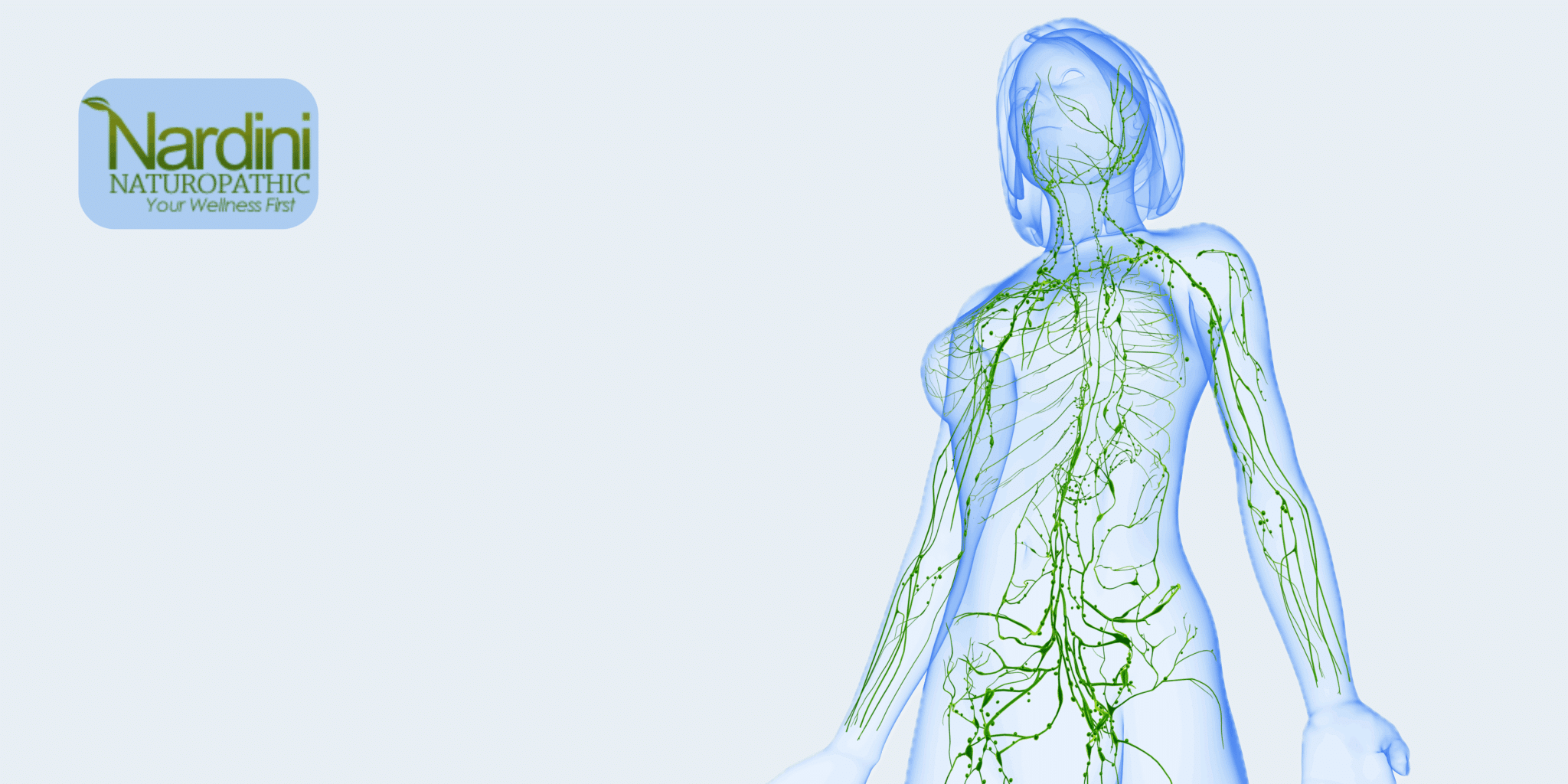
The lymphatic system is a network of vessels throughout your body which transports fluid, called lymph. Think of it as a parallel circulatory system1.
It also consists of structures known as lymph nodes, and other collections of lymphatic tissue, that contain white blood cells and filter the lymph fluid.
Its main functions are threefold:
- Return excess fluid from the body’s tissues back to the circulatory system
- Transport fat taken up by the digestive system
- Detoxify and repair (what some call the immune system)
Unlike the circulatory system, the lymphatic system doesn’t have a central organ (the heart) to move the fluid around. Instead, it relies on the contraction of muscles and the act of breathing to get the lymph flowing.
With the help of this muscular activity, the lymph makes it way up from the legs, torso, and arms and down from the head and neck into the blood vessels near the heart. Thus, the extra fluid from the tissues is returned to the main circulation.
This lymph fluid often contains toxins which, once returned to the circulatory system, can be eliminated through the kidneys and liver.
If the lymphatic system stops working, fluid builds up in the tissues which creates swelling (known as edema in medical terms or lymphedema if the swelling is caused by lymphatic back-up). Besides making it harder to lose weight, this extra fluid can accumulate toxins, triggering inflammation in the surrounding tissue.
Redness, pain, and swelling on the skin, in the joints, in the lymph nodes, and in the digestive tract may be partially caused by a failure of the toxins to get cleared through the lymphatic system.
When the toxins aren’t being cleared by the lymphatic system, the body may try to push them out through the respiratory system, leading to the symptoms of cold and flu.
Certain health conditions, like heart failure and kidney disease, may make it even harder for your lymphatic system to keep up with the increased demand for fluid drainage.
For these reasons, keeping your lymph flowing is one of the keys to maintaining your health.
The question is how?


Three Easy Ways To Get Your Lymph Flowing
Luckily, keeping your lymphatic system working is not rocket science. In fact, I’ll give you 3 easy tips for better lymph flow that don’t require a lot of time, money, and energy.
1. Exercise
One of the best ways to get the lymph going is through regular exercise.
A 1997 research study tracked the clearance of an injected protein from the leg muscles of men during various types of exercise2. They found that the protein cleared from the muscle three to six times faster during muscle contraction compared to resting periods. This strongly suggests that muscle movement drives the flow of the lymph fluid, helping to clear the protein and, potentially, other toxins.
Some of the most recommended exercises for boosting lymphatic flow include walking and using a rebounder (jumping on a mini-trampoline). These should be done every day, if possible. For each session, walk for 30-45 minutes at a moderate to brisk pace or use the rebounder for 20 minutes.
Muscle building exercises, using light weights, also assist pumping the lymph. Ideally, strength exercises should be done for 30-40 minutes, 3x/week.
2. Deep Breathing
Like the muscles of the limbs, the diaphragm is a powerful muscle that helps move the lymph during the breathing process. Taking deep diaphragmatic breaths (belly breaths) is a great way to encourage lymphatic flow.
A study published in 2022 on cancer patients following surgery, found that diaphragmatic breathing, combined with limb coordination training, improved symptoms and reduced lower limb circumference (reduced the edema)3.
Here is a simple set of steps for deep breathing that can get the lymph flowing:
- Sit in a comfortable cross-legged position or on a chair, back straight.
- Inhale deeply, pushing the abdomen out, and taking in as much air as possible in the space of 1 second.
- Push your abdomen in forcefully (but not so hard as to cause pain) to expel the air through the nostrils.
- Inhale again by pushing the abdomen out and letting the air rush back into the vacuum created by the exhalation.
- The whole process, inhalation and exhalation, should take not much more than 2 seconds. Both should be forceful and will be quite audible.
- Repeat ten times.
As with exercise, consistency is the key. Try to do this set at least once per day.
3. Dry Brushing
As the name suggests, dry brushing involves using a dry brush to exfoliate dead skin and stimulate lymphatic flow.
Although more research is needed to confirm the benefits of this technique, it’s easy and safe to do if done correctly.
Here are some basic rules for dry brushing safely and for best results:
- Use a natural-bristle brush with a long handle for hard-to-reach areas. Avoid synthetic brushes.
- Dry does not just refer to the brush. Always dry brush before showering, when the skin is still dry, for optimal exfoliation.
- Start at your feet and move up toward the heart, using light pressure and circular strokes. When working on your head and neck, move downward.
- Give extra attention to areas with larger concentrations of lymph nodes, such as the armpits, neck, and around the groin.
- Rinse off dead skin cells in the shower and follow up with a natural hydrating oil or lotion. Rinse off your brush afterward.
Dry brushing can be done 2-5 times per week, depending on how well your lymphatic system is working. Don’t over-brush as too much exfoliation can damage the skin.
And, of course, don’t dry brush over wounds or on inflamed skin.
Five Bonus Tips
Stay hydrated: Get 8-12 glasses of water per day. This helps to clear out water retention and toxins. Dehydration can cause lymphatic congestion and blockages in the first place.
Avoid inflammatory foods: Eating refined oils, processed meats, added sugar, caffeine, and foods that you may be sensitive to (like gluten, dairy, and corn) can lead to inflammation build-up in the body, slowing lymphatic drainage.
Consume healthy foods: Foods that hydrate, like cucumbers, zucchini, and melons, and anti-inflammatory foods, like fish, olive oil, and turmeric, help to promote lymphatic flow.
Sip some tea: A tea made from herbs, like nettle, parsley, and dandelion greens, helps to flush out the kidneys and keep edema in check.
Massage with essential oils: Apart from going for a professional lymph drainage massage, a home version can be done using a carrier base oil like olive oil or almond oil and adding essential oils of your choice.
Good essential oils for the lymphatic system include: grapefruit, peppermint, ginger, cypress, juniper, lemon, lavender, rosemary, thyme, and cinnamon (helps to break up congestion, remove toxins, and strengthens veins).
Mix 250 ml of carrier oil and 30 drops each of your three essential oils of choice. Rub in the mixture gently on your arms, legs, and stomach, always moving towards the heart. Apply the oil at least once daily – before bedtime is an especially good time to do this.
Final Words
When you’re considering your energy, immune system, and weight, don’t sleep on the lymphatic system. It’s just as important as your circulatory system is to your overall health. Neglect it at your peril.
The good news is that keeping your lymphatic system in top shape may be easier than you thought!
- Anatomy, Lymphatic System. https://www.ncbi.nlm.nih.gov/books/NBK513247/
- Lymph flow dynamics in exercising human skeletal muscle as detected by scintography. https://pmc.ncbi.nlm.nih.gov/articles/PMC1159951/
- The rehabilitation efficacy of diaphragmatic breathing combined with limb coordination training for lower limb lymphedema following gynecologic cancer surgery. https://www.frontiersin.org/journals/bioengineering-and-biotechnology/articles/10.3389/fbioe.2024.1392824/full
Book An Appointment With Nardini Naturopathic
Having trouble losing weight? Are you interested in finding out if your lymphatic system could use some improvement?
Or perhaps you’d like a review of your overall diet to see where you could be doing better.
Maybe you have food allergies or intolerances and worry you aren’t getting enough nutrients because of your restricted diet.
I’m Dr. Pat Nardini, a naturopathic doctor who offers nutritional counseling services to help ensure all of those gaps in your diet are filled, and that you’re getting enough of all the important nutrients which your body needs to function at its best.
Contact me today for more information, or book a free 15-minute consultation where I will help you understand how naturopathic medicine can help you.
If you have questions about naturopathic medicine, or you’d like to take your first step into the world of naturopathy, contact us at Nardini Naturopathic, and let’s book an appointment.
Yours in health,
Dr. Pat Nardini, Naturopathic Doctor
320 Danforth Ave suite 206,
Toronto, ON, M4K 1N8
-https://g.page/NardiniNaturopathicDanforth
Dr. Pat Nardini, ND is a licensed doctor of naturopathic medicine in Toronto, Ontario. He offers science based natural health solutions with a special focus on thyroid conditions.