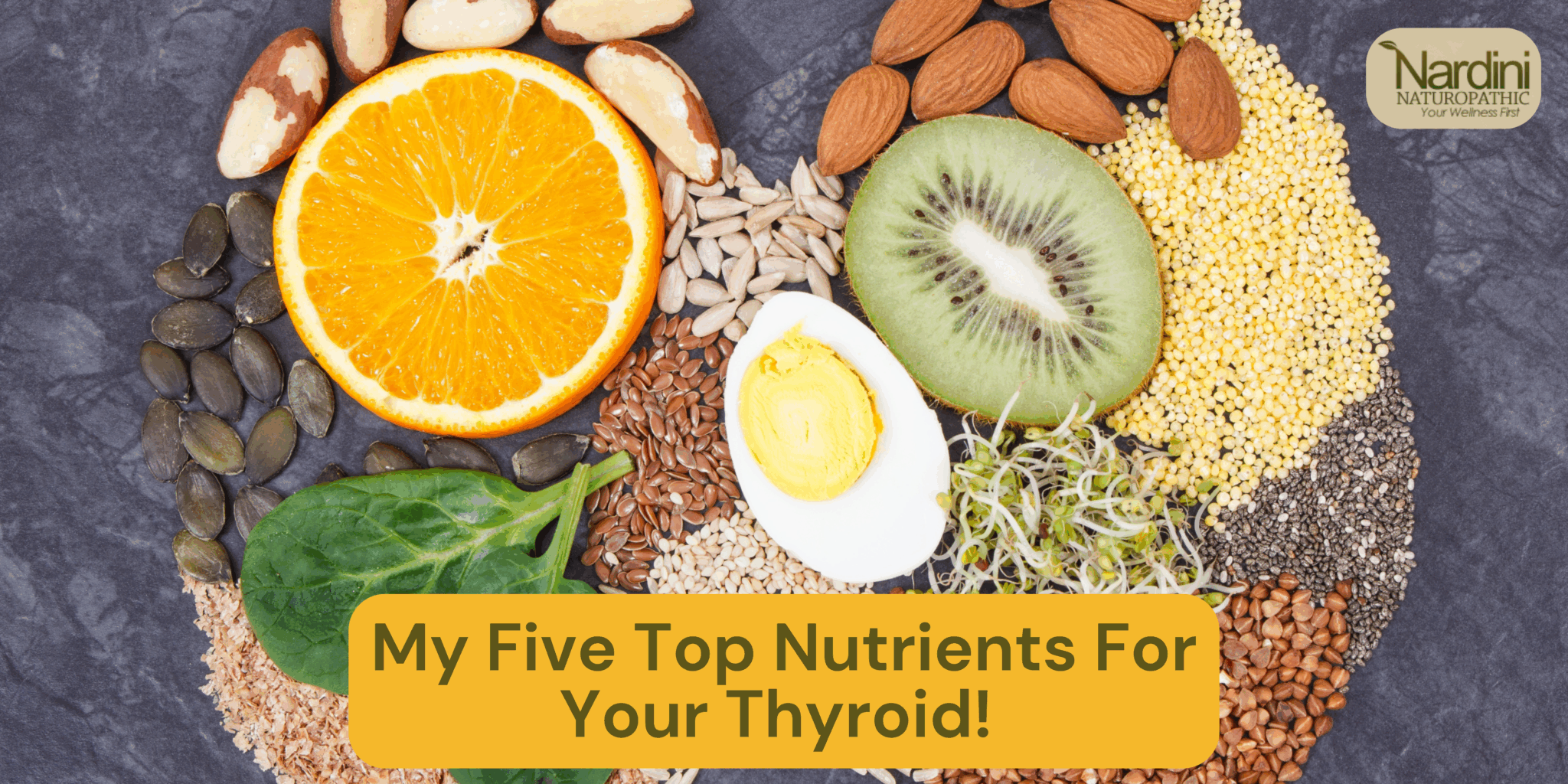
If you’ve been following me at all over the years, you know that I’m a bit obsessed about the thyroid and the thyroid system, more generally. The reason for this is because of how critical your thyroid system is to your health.
Energy, body weight, body temperature, hair growth, digestion, and a healthy immune system all depend on a functioning set of hormones made by the thyroid.
With that in mind, what can you do to make sure your thyroid is in top shape?
We all know that nutrition is a major priority when it comes to health. It’s no different with your thyroid.
Today we’ll have a look at some of the most important nutrients needed by the thyroid system.
For those that are new to this, let’s first review what the thyroid is and how it can run into trouble.
What Is Your Thyroid?
Your thyroid is a small butterfly-shaped gland located near the base of your neck and is part of your endocrine system.
The main purpose of your thyroid gland is to create thyroid hormones, whose role is to regulate your metabolism, which essentially means everything that happens in the body.
Your thyroid knows to secrete hormones into your bloodstream when it receives a chemical signal known as TSH, or thyroid-stimulating hormone.
TSH is sent from your pituitary gland, which is located at the base of your brain.
Thyroid hormones play an essential role in maintaining your heart rate, energy, digestion, mood, muscle control, and bone maintenance. They also help your body maintain its optimal temperature and a healthy weight.
What Is Hypothyroidism?
Hypothyroidism is a condition in which your body under-produces thyroid hormones.
There are two types of this condition: primary and secondary hypothyroidism.
Primary hypothyroidism occurs when your thyroid gland doesn’t release thyroid hormones like it should, even when adequate TSH is present.
This kind of hypothyroidism can be caused by several factors, including iodine deficiency, genetic disorders, certain medications, and thyroid surgery.
Many individuals with primary hypothyroidism experience this condition as a result of an autoimmune disease called Hashimoto’s thyroiditis.
Secondary hypothyroidism occurs due to a lack of TSH, which is an issue with the pituitary gland’s function.
There is also a condition, sometimes referred to as Wilson’s Temperature Syndrome (WTS), which involves the overall thyroid system. In WTS, the thyroid hormones are produced normally by the thyroid gland, but they are not metabolized properly by the body. This can also result in hypothyroid symptoms.
Due to the multiple crucial functions of thyroid hormones, the signs and symptoms of this condition affect numerous systems of your body.
Symptoms and signs of hypothyroidism include:
- Chronic fatigue
- Dry skin
- Weight gain
- Increased cold sensitivity and low body temperature
- Muscle weakness, aches, stiffness, and tenderness
- Hair Loss
- Slow heart rate
- Elevated blood cholesterol
- Irregular menstruation
- Enlarged thyroid gland
5 Top Thyroid Nutrients
Ensuring proper nutrition when you have hypothyroidism takes a bit more than just a multi-vitamin.
Let’s look at some of the vitamins and minerals your body needs to support proper thyroid hormone production and function.
The following nutrients are best found through dietary means rather than supplementation, unless advised and monitored by a health professional.
1. Selenium
Selenium is an essential nutrient and an antioxidant, meaning it fights oxidative stress and helps protect your thyroid gland from cell damage. This action is helpful for preventing auto-immune conditions of the thyroid, like Hashimoto’s1.
Selenium is also required to “activate” thyroid hormones, making them useable by your body. The enzyme that helps convert T4 thyroid hormone into the metabolically active T3 thyroid hormone needs selenium to perform its function2.
Without selenium, your T3 levels can go down and your metabolism with it.
Dietary Sources Of Selenium
- Fatty fish such as tuna and sardines
- Eggs
- Brazil nuts
- Legumes
The best supplemental form of selenium appears to be in a complex with the amino acid methionine, called selenomethionine. Doses usually range from 100 mcg to 400 mcg per day.
If you are considering taking selenium as a supplement, make sure to consult with a qualified health practitioner for advice on the correct dose for you.
2. Zinc
Zinc serves a similar purpose to selenium, which is to make thyroid hormones available to be used by your body. Research has shown it to be important to the conversion of T4 to T33.
This mineral may also help your body regulate TSH and it has an overall benefit to thyroid hormone production4.
Dietary Sources Of Zinc
- Shellfish such as oysters and mussels
- Chicken
- Beef
- Whole grains
Sometimes, it may be necessary to supplement with zinc. Although zinc oxide is one of the most common forms of zinc to be found, it’s not the best absorbed. Zinc citrate, (bis)glycinate, and picolinate are examples of better-absorbed options.
It most commonly comes in capsules containing 15 to 50 mg of zinc. Always consult with your practitioner, though, to ensure that you’re getting the right amount.
3. Iodine
As mentioned above, iodine deficiency can be a cause of primary hypothyroidism.
This is because iodine is essential for thyroid hormone production. In fact, all thyroid hormones, including T4 and T3, contain iodine (the number in the hormone name is the number of iodines present in it).
Many studies document the relationship between iodine deficiency and hypothyroidism, showing that insufficient amounts of iodine in the body are known to cause this condition5.
Iodine deficiency is relatively common and affects around one-third of the global population.
Dietary Sources Of Iodine
- Seafood
- Seaweed (kelp)
- Dairy
- Eggs
- Iodized salt
However, iodized salt tends to contain flow agents and other additives that aren’t good for you, so I don’t recommend it.
If necessary, you can supplement iodine with potassium iodine or Lugol’s solution. The latter will give you a balance of the two different forms of iodine – iodine and iodide – which your body needs.
The doses of iodine can vary quite a lot. Remember, if you believe that you’re deficient in iodine and would like to supplement with it, make sure to consult your qualified health practitioner.
4. L-Tyrosine
L-tyrosine is an amino acid that’s a necessary building block of the thyroid hormones6. The thyroid gland uses tyrosine to build a long molecule called thyroglobulin which then incorporates iodine into it.
Thyroglobulin then gets parcelled off into fragments that form T4 and T3 thyroid hormones. As with iodine, if there’s not enough tyrosine around, your thyroid may have trouble making its hormones.
The body also uses L-tyrosine to manufacture neurotransmitters, like dopamine, epinephrine (adrenalin) and norepinephrine (noradrenalin), which influence your mood, stress response, and metabolism. All of these can impact thyroid system function.
Dietary Sources Of L-Tyrosine
- Poultry
- Fish
- Eggs
- Pumpkin seeds
- Avocado
If necessary, supplementing with L-tyrosine is easy. Most capsules contain about 500 mg and multiple capsules may be needed every day.
If you suspect you may be low in L-tyrosine, check with your practitioner first as taking too much tyrosine could theoretically slow down thyroid hormone production.
5. Vitamin D
Research suggests that Vitamin D plays a role in preserving healthy thyroid function and preventing chronic inflammation in the thyroid gland (thyroiditis).
Thyroiditis is a condition where your thyroid becomes inflamed, and it’s often caused by what are referred to as autoimmune diseases. There are different types of thyroiditis, but the two most common types are Graves’ Disease and Hashimoto’s Thyroiditis.
Multiple research studies have shown that people with Hashimoto’s have lower than average levels of Vitamin D7.
Supplementing with Vitamin D may help those diagnosed with thyroiditis to lower their anti-thyroid antibody levels, and it has many other health benefits as well8.
Dietary Sources Of Vitamin D
- Fatty fish
- Fish liver oils
- Beef liver
- Eggs
- Cheese
The best source of Vitamin D comes from the sun, which helps us convert cholesterol in our skin into Vitamin D.
If it’s not summertime, or if your Vitamin D levels in the blood have tested low, it may be necessary to take a supplement. Doses start at 1000 IU (25 mcg) per day but often more is required to reach healthy levels in the body.
If you think you may need a higher dose, check with a qualified health practitioner first as overloading on Vitamin D has the potential to do harm.
Final Words
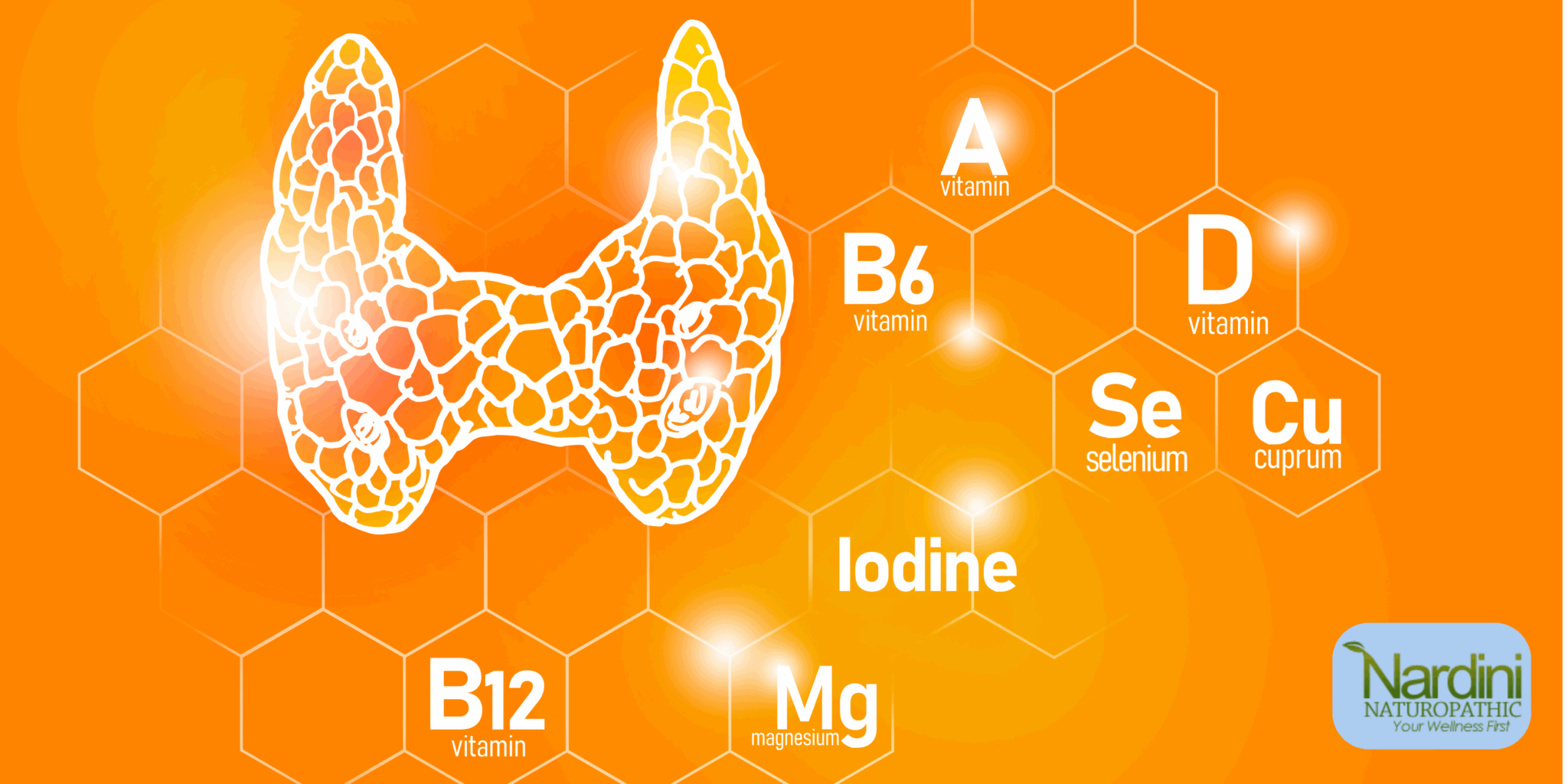
Other nutrients that are necessary for healthy thyroid function include, but are not limited to: iron, Vitamin A, magnesium, and Vitamin B12.
It’s not difficult to get the proper nutrition for your thyroid if you’re proactive about it. Don’t wait until your symptoms are severe before checking to see if your thyroid needs help!
Eating a healthy diet and ensuring your digestive system is in good form will go a long way to keep your thyroid nutrients up.
If you make sure you’re getting these five top nutrients, you’ll be on your way to a healthy thyroid system!
- http://online.liebertpub.com/doi/abs/10.1089/thy.2007.0040
- http://en.wikipedia.org/wiki/Iodothyronine_deiodinase
- https://pubmed.ncbi.nlm.nih.gov/3761111/
- https://karger.com/anm/article-abstract/51/2/188/40455/Effect-of-Zinc-Supplementation-on-Thyroid-Hormone?redirectedFrom=fulltext
- https://pubmed.ncbi.nlm.nih.gov/25591468/
- https://www.sciencedirect.com/topics/biochemistry-genetics-and-molecular-biology/thyroid-hormone-synthesis
- https://pubmed.ncbi.nlm.nih.gov/23337162/
- https://www.academia.edu/89837770/The_effect_of_vitamin_D_supplementation_on_thyroid_autoantibody_levels
Book An Appointment With Nardini Naturopathic
Having trouble losing weight? Are you interested in finding out if your thyroid system could use some improvement?
Or perhaps you’d like a review of your overall diet to see where you could be doing better.
Maybe you have food allergies or intolerances and worry you aren’t getting enough nutrients because of your restricted diet.
I’m Dr. Pat Nardini, a naturopathic doctor who offers nutritional counseling services to help ensure all of those gaps in your diet are filled, and that you’re getting enough of all the important nutrients which your body needs to function at its best.
Contact me today for more information, or book a free 15-minute consultation where I will help you understand how naturopathic medicine can help you.
If you have questions about naturopathic medicine, or you’d like to take your first step into the world of naturopathy, contact us at Nardini Naturopathic, and let’s book an appointment.
Yours in health,
Dr. Pat Nardini, Naturopathic Doctor
320 Danforth Ave suite 206,
Toronto, ON, M4K 1N8
-https://g.page/NardiniNaturopathicDanforth
Dr. Pat Nardini, ND is a licensed doctor of naturopathic medicine in Toronto, Ontario. He offers science based natural health solutions with a special focus on thyroid conditions.