When someone mentions hormones, we often think of the teenaged kind or the ones that run out on us after menopause and as we age. However, there’s a lot more to hormones than that.
Hormones are biological chemicals produced by the organs of the endocrine system. Their functions range from facilitating reproduction, as with estrogen and testosterone, to balancing blood sugar, as performed by insulin.
Your endocrine system may not get as much attention as other parts of your body, but it’s critical for optimal health.
Because your endocrine system is made up of so many different organs and glands, it needs to stay in balance. If it isn’t, it can lead to a variety of different health concerns, including diabetes, infertility, and thyroid imbalance.
So, how do we keep the various glands of the endocrine system in balance?
To answer this question, it would help to know a little more about the endocrine system.
What Is The Endocrine System?
As mentioned before, the endocrine system consists of various organs, glands, and tissues that produce hormones. They all have in common the fact that they secrete hormones directly into your bloodstream.
Acting like chemical messengers, the various hormones then travel in the blood to trigger physiological changes in their target organs.
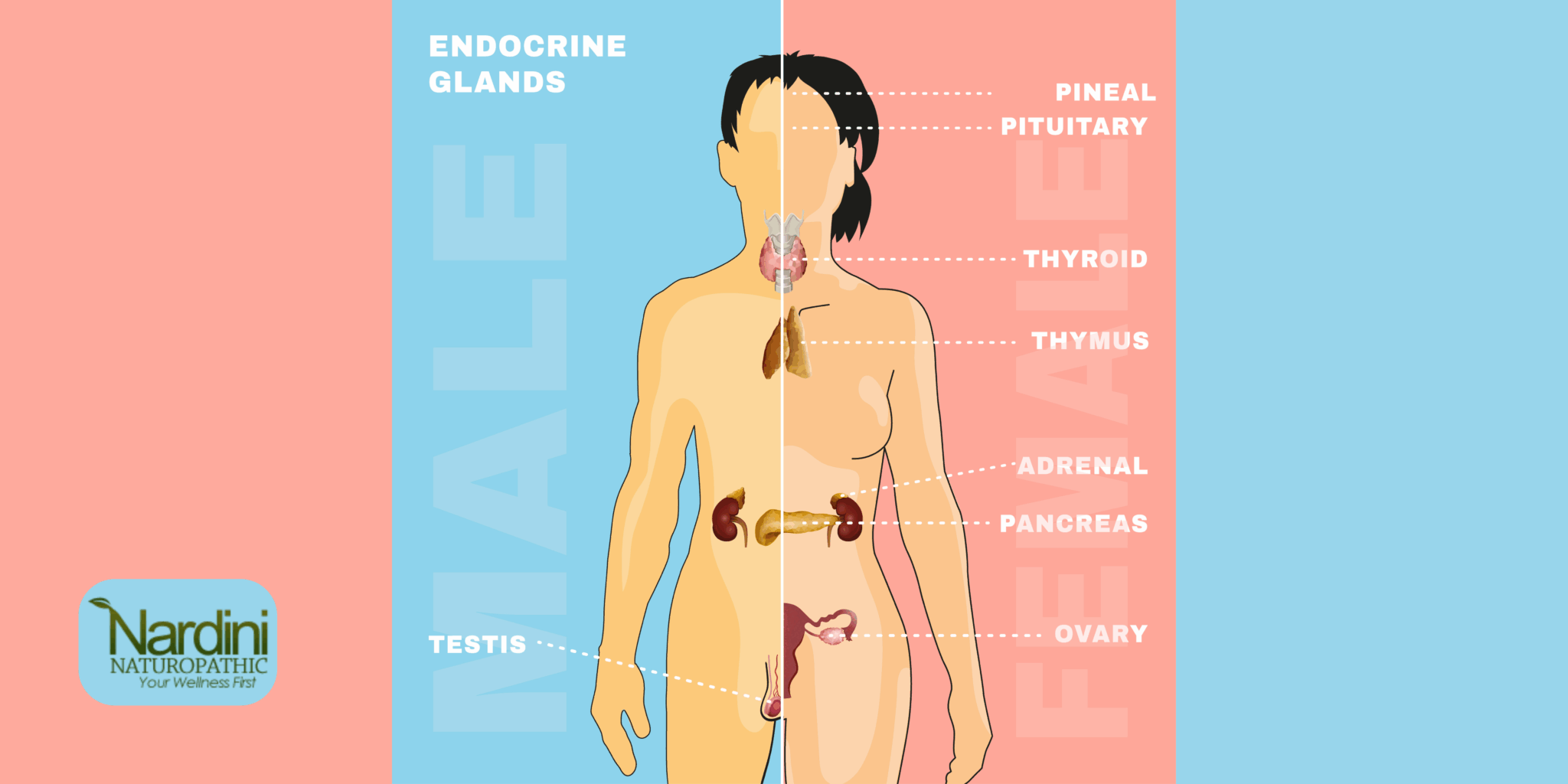
The organs that make up your endocrine system include your:
- Thyroid
- Parathyroid
- Adrenal glands
- Pineal gland
- Hypothalamus
- Pituitary gland
- Pancreas
- Ovaries/testes
Beside the fact that they all secrete hormones, a major reason why these glands are grouped together as a system is because they interact with each other, directly or indirectly. They communicate by sending their hormones to each other.
For example, the pituitary gland in the brain sends hormones, like TSH (thyroid stimulating hormone) to the thyroid, ACTH (adrenocorticotropic hormone) to the adrenal glands, and gonadotropins to the ovaries and testes, to stimulate the target glands/organs to do their thing. In response, the target glands produce their own hormones which feedback to the pituitary, telling it when it can stop making its stimulating hormones.
Why Is Your Endocrine System So Important?
Each gland of the endocrine system secretes its own hormones, and each has a different job to do. Some of the responsibilities of your endocrine system include managing your:
- Appetite
- Digestion
- Energy levels
- Stress management
- Sexual health
- Sleep
- Metabolism
- Body temperature
- Growth
- Blood sugar
- Brain development
- Calcium levels
- Immune system
- Heart rate
- Blood pressure
As you can see, these account for much of what the body does every day. That makes it extremely important to keep the endocrine system healthy so that it can produce its hormones to help your body perform its normal functions.
How exactly do we keep the endocrine system healthy, then?

Support Your Endocrine System, Naturally
The good news is that there are many natural ways to support the endocrine system to achieve hormonal balance.
Let’s look at some of the options, with a focus on five of the endocrine organs most important to your health.
1. Pituitary
Sometimes called “the master gland,” the hormones produced by the pituitary gland control many of the other glands of the endocrine system.
The pituitary gland itself is controlled by the hypothalamus, another structure in the brain, which regulates the release of pituitary hormones.
There are two lobes of the pituitary gland, each of which controls different hormones.
The Anterior Lobe
The anterior lobe releases the following types of hormones:
- Thyroid-stimulating hormone
- Growth hormone
- Beta-melanocyte-stimulating hormone (controls skin pigmentation)
- Endorphins and Enkephalins (for pain relief and part of the body’s reward system)
- Prolactin (promotes breast milk production)
- Adrenocorticotropic hormone (stimulates the adrenal glands to produce cortisol)
- Follicle-stimulating hormone (promotes egg growth and sperm development)
- Luteinizing hormone (promotes ovulation and reproductive hormone production)
The Posterior Lobe
The posterior lobe of the pituitary gland secrets two types of hormones, vasopressin and oxytocin.
Vasopressin (aka anti-diuretic hormone) prevents dehydration by helping your body conserve water, and oxytocin stimulates uterine contraction during labour, as well as the release of breast milk.
Some of the symptoms to watch for which may indicate a condition related to the pituitary gland include:
- Fatigue
- High blood pressure
- Weakness
- Headaches
- Weight gain which can’t be accounted for by a change in diet or exercise habits
- Problems with memory
- Depressive episodes and mood swings
- Trouble falling or staying asleep
- Infertility, irregular periods, erectile dysfunction, and other reproductive issues
- Unusual hair growth
- Lactation when not breastfeeding
Certain minerals, especially manganese and magnesium, as well as foods rich in vitamin E, are specifically important for pituitary gland function.
Adding leafy greens, wheat germ, legumes, and nuts to your diet can help you to meet these requirements.
Healthy fats are important too. A review article published in 2024 suggests that omega-3 fats may be helpful to regulate the hypothalamus-pituitary-adrenal (HPA) axis by reducing excess cortisol production due to stress1.
Iodine and iron also play important roles in pituitary gland function.
Low iodine can result in not enough thyroid hormone, leading to the overproduction of thyroid-stimulating hormone. This may overtax the pituitary’s ability to make other hormones.
Iron, on the other hand, is one to watch – too much of it can damage the pituitary gland. If you suspect you need iron, get a blood test to check, and only supplement with iron if you’re low in it.
2. Adrenal Glands
Your adrenal glands are located on top of your kidneys and consist of two separate sections.
The outer section of the gland is called the adrenal cortex and the internal portion of the gland is called the adrenal medulla.
The two sections of the adrenal glands have very different functions.
The Adrenal Cortex
The adrenal cortex produces hormones which are required for life – hydrocortisone (cortisol) and corticosterone.
Hydrocortisone controls the body’s conversion of carbohydrates, fats, and protein to energy. It also acts as an anti-inflammatory and is instrumental in the body’s response to stress. In humans, corticosterone plays a minor role in the stress response.
Another hormone produced by the adrenal cortex that is crucial for the stress response is called dehydroepiandrosterone (DHEA for short).
DHEA helps regulate other hormones in your body, including testosterone and estrogen. When you’re exhausted, your DHEA levels drop, which can result in a lower sex drive, fatigue, and a decreased ability to fight infections (or, looked at another way, stay detoxed).
The adrenal cortex also produces aldosterone which controls blood pressure and the body’s fluid balance.
The Adrenal Medulla
Hormones produced in the adrenal medulla are also very important.
These include epinephrine and norepinephrine which are responsible for the “fight or flight” response that occurs when you face a stressful situation.
Epinephrine (aka adrenaline) causes your heart rate to increase and blood sugar to spike.
Norepinephrine (aka noradrenaline) works alongside epinephrine – it can cause blood vessels to narrow, resulting in high blood pressure.
Although diseases of the adrenal glands, like Cushing’s Syndrome and Addison’s Disease, exist, they are not always required for the adrenal glands to malfunction.
The term “adrenal fatigue” is sometimes used to describe a condition wherein the adrenal glands don’t perform to their full ability, and hormone production is slowed. This is often caused by chronic, unmanaged stress.
Individuals suffering from adrenal fatigue may complain of feeling generally unwell, and tired.
Other common symptoms include:
- Feeling agitated, but tired at the same time
- Not feeling able to handle stress
- Cravings for salty foods
- Weakened immune system
- Not feeling refreshed, even after sleeping
If you are suffering from adrenal fatigue, you may be able to manage it through diet and nutrition. Managing stress also goes a long way to support the adrenal glands.
As mentioned, proper nutrition is critical. Your adrenals need Vitamins B2, B5, B6 and C to produce DHEA and cortisol properly. They also need minerals such as magnesium, manganese, selenium, and zinc.
As mentioned with the pituitary, omega 3 fats present in cold water fish, flax seeds, hemp seeds, and walnuts, may support healthy adrenal gland function by reducing overproduction of cortisol.
Herbs that are classified as “adaptogens”, like Siberian ginseng, Ashwagandha, Fo-Ti, Rhodiola, Reishi mushroom, and Holy Basil, strengthen the adrenal glands to improve their function during the resistance phase of the stress response.
Acupuncture can also be used to improve adrenal function.
3. Thyroid
Your thyroid is a small, butterfly-shaped gland that lives in the front of your neck, in front of your windpipe and just above your collarbone.
Its job is to absorb iodine from your diet, combine it with the amino acid tyrosine and produce thyroid hormones – mainly thyroxine (T4) and triiodothyronine (T3).
These hormones regulate the use of oxygen and energy by your cells, tissue, organs, and glands.
This controls your metabolism, heart rate, body temperature, digestion, the production of other hormones in your body, and many other functions.
However, for these systems to function properly, your thyroid must release the correct level of hormones.
Like the adrenal glands do, your thyroid partners with the pituitary gland in your brain.
This gland monitors thyroid hormones circulating in your bloodstream and increases or decreases its release of thyroid stimulating hormone (TSH), signalling your thyroid to produce more T4 or less T4, respectively.
When you have a thyroid condition, your thyroid may release too much or too little hormone, leading to health problems and possibly life-threatening diseases.
These include hypothyroidism, hyperthyroidism, goiter, Hashimoto’s thyroiditis, Graves’ disease, and even thyroid cancer.
Even if your thyroid is producing the correct amounts of its hormones, sometimes they don’t end up working as they should.
Your body must take the T4 (which is a precursor hormone) produced by your thyroid and convert this into the active thyroid hormone, T3, which it uses to signal your organs to behave the way they should.
But sometimes, due to ongoing stress or nutrient deficiencies, not enough of the T4 converts to T3, which causes a slow-down in your metabolism. This condition is sometimes referred to as Wilson’s Temperature Syndrome, where there is enough T4, but it isn’t being converted into T3 at the appropriate rate.
Thyroid conditions can cause a wide variety of health problems. These include:
- Digestive issues
- Chronic fatigue
- Insomnia
- Muscle weakness, aches, and cramps
- Temperature sensitivity
- Dry or irritated skin
- Constipation
- Diarrhea
- Anxiety & depression
- Menstrual issues
- Sexual dysfunction
- Infertility
- Unexpected weight gain
- Unexpected weight loss
- Difficulty concentrating
- Difficulty remembering
- Enlarged neck (goiter)
Ensuring proper nutrition is key when you’re managing a thyroid condition. There are several vitamins and minerals your body needs to support proper thyroid hormone production and function.
If your thyroid is healthy, then it’s often sufficient to maintain that through a diet rich in thyroid-specific nutrients. However, if you’re managing a thyroid condition, supplementation of certain vitamins and minerals may be necessary.
Nutrients critical to healthy thyroid function include iodine, selenium, zinc, L-tyrosine, Vitamin D, Vitamin B12, iron, and magnesium.
There are also botanical medicines that support healthy thyroid hormone function. They include Ashwagandha, Guggul, Blue Flag Iris, and Bladderwrack.
Herbs that support your adrenal glands, like Siberian ginseng and American ginseng, and ones to support nervous system function, like Chamomile and Passionflower, may also be helpful to promote proper thyroid hormone function.
As with the adrenal glands, stress management can be extremely useful for the thyroid hormones. Deep breathing, meditation, and physical exercise can go a long way in promoting sufficient conversion of T4 into active T3 thyroid hormone.
4. Pancreas
The pancreas is located towards the rear of the body, in the abdominal cavity behind the stomach.
It’s about six inches long, starting at the right side of the abdomen, where it connects to the small intestine, and then extends towards the left side of the body.
As an endocrine gland, a major role of the pancreas is the production of the hormones insulin and glucagon.
Glucagon helps your body break down glycogen (a storage form of carbohydrate stored in your liver and muscles) into glucose, which it can then use as fuel.
Insulin, meanwhile, regulates the level of glucose in your blood, by lowering it. It’s best known for its association with diabetes.
However, the pancreas is also an exocrine gland which secrete their non-hormone products into ducts rather than into the blood.
In this role, the pancreas excretes enzymes into the small intestine that help your body break down the macronutrients (carbohydrates, protein, and fat) in food.
There are several illnesses which can affect the pancreas, including cystic fibrosis, pancreatitis, diabetes (Types I and II), and pancreatic cancer.
The most well-known pancreatic condition is diabetes which is a disorder of insulin.
The role of insulin is to move glucose sugar out of the blood and into your body’s tissue so it can be used as fuel by cells.
With diabetes, either the pancreas produces little to no insulin (Type I) or the insulin does not work properly due to a phenomenon called insulin resistance (Type II).
When there’s not enough working insulin, excess glucose in your bloodstream can lead to dehydration, weight loss, and damage to blood vessels, nerves and organs. Other signs and symptoms of diabetes include blurred vision, mood swings, feeling tired or worn out, feeling thirsty, and wounds which don’t heal.
So how can you tell when there is something wrong with your pancreas?
Aside from being diagnosed with a condition such as diabetes, here are some signs to watch for, indicating something might be out-of-sorts with this very important gland:
- Abdominal cramps
- Bloating
- Heartburn
- Diarrhea or constipation
- Gas
- Belching
One of the best ways to support the pancreas’ endocrine function is by managing your blood sugar through the diet. This helps to avoid the overproduction of insulin in response to high blood glucose, which leads to insulin resistance and more pressure on the pancreas to produce insulin.
For some, a keto-style diet may be helpful to maintain healthy blood sugar levels; for others, a Mediterranean diet may work well.
The pancreas requires nutrients like Vitamins B3 and B6 to produce enzymes, antioxidants to prevent damage to pancreatic cells, and Vitamin D as a regulatory factor2.
Zinc, chromium, and alpha lipoic acid are necessary nutrients for insulin production and proper function.
Botanicals that can help regulate blood sugar include Bitter Melon, Cinnamon, Fenugreek and Turmeric. An extract of Oregon Grape and Goldenseal, called berberine, has also shown much promise in the treatment of diabetes3.
Of course, physical exercise and stress management are keys to maintaining blood sugar by reducing insulin resistance and preventing the overtaxing of the pancreas.
5. Ovaries/Testes
Some endocrine organs are specific to one sex or the other – the ovaries in women and the testes in men.
Their main function is producing cells needed for reproduction (egg cells in women and sperm cells in men). But a very important secondary function is their endocrine role, producing hormones. In fact, the ovaries and testes make the same hormones, but in very different amounts.
Ovaries
The major hormone products of the ovaries are the estrogens (estrone, estradiol, and estriol) and progesterone.
During the first half of the menstrual cycle, follicle-stimulating hormone (FSH) from the pituitary gland stimulates the ovaries to produce estrogens which help the growing egg follicle and promote healthy breast function. By mid-cycle, the surge in estrogen causes the pituitary gland to release luteinizing hormone (LH), which triggers ovulation.
Estrogens have non-reproductive benefits too: they promote healthy blood vessels, bones, skin, and brain function.
In the second half of the cycle, after ovulation, the remnant of the follicle – known as the corpus luteum – makes progesterone. Progesterone develops and maintains the uterine lining and promotes milk production during pregnancy. If an egg does not become fertilized that month, progesterone levels drop, triggering a period.
Like estrogen, progesterone promotes healthy bones. It can also regulate mood and help maintain a healthy libido4.
The ovaries also produce androgens (so-called male hormones), like testosterone. The androgens are mostly used to make estrogens, but small amounts of them stick around to influence mood, libido, bone and muscle health, and the cardiovascular system5.
Testes
As opposed to the ovaries, the testes produce a lot of androgens and much smaller amounts of estrogen and progesterone.
Androgens, including testosterone, promote sperm production as well as the development and maintenance of muscle mass and strong bones. Testosterone levels decline with age and that explains why we tend to lose muscle and have a higher risk of fracture in our later years, both men and women.
Just because men make lots of testosterone, does not mean that they don’t also need estrogens and progesterone. Both sexes use an enzyme called aromatase to convert androgens into estrogens. In men, that estrogen is needed for healthy bones, cardiovascular system, reproductive function, and brain function6.
Men need progesterone as a precursor to testosterone. Progesterone also helps balance out estrogen levels, maintain healthy blood vessels, regulate mood, and promote a healthy prostate in men7.
In men and women, signs and symptoms of imbalances between estrogens, progesterone, and androgens include:
- Anxiety and Depression
- Low libido
- Infertility, irregular periods, erectile dysfunction, and other reproductive issues
- Symptoms of menopause (or andropause, the so-called male menopause)
- Higher risk of bone fracture
- Muscle weakness
- Hair loss or unusual hair growth
Not getting the proper nutrients can cause several issues with both the ovaries and testes, so addressing nutritional deficiencies is an easy way to correct them.
Omega 3 fats, Vitamin D, selenium, folic acid, and antioxidant nutrients, like Vitamins C and E help the ovaries and testes to stay healthy and perform their functions. Zinc is another mineral that is crucial to testicular health.
Maintaining a healthy weight, or losing weight if you are overweight, may help to reduce excess estrogens that can build up in fatty tissue.
Sleep is another lifestyle factor which is important to many aspects of health. Not getting enough sleep, or having poor sleep quality due to stress, can suppress the production of sex hormones.
Botanical medicine can be extremely helpful in supporting the ovaries and testes.
Vitex agnus castus, Black Cohosh, and Red Clover are plants which may help balance estrogen and progesterone levels in women.
Ashwagandha, Tribulus terrestris, and Tongkat ali are examples of herbs that can help boost testosterone levels in men.
Fenugreek may lower levels of aromatase, the enzyme that converts testosterone to estrogen, which may be helpful for low libido in men and women, for menopausal symptoms, and for prostate enlargement in men8.
Final Words
A good general approach to keeping the endocrine system healthy is by managing your oxidative stress. So, an adequate intake of antioxidants is essential to keeping your hormones happy.
Always consider good dietary practices to support the endocrine system. It’s a good idea to avoid refined and processed sugar, and unhealthy trans fats. It’s also recommended to increase the number of vegetables in your diet, which will ensure you are getting plenty of vitamins and minerals. Proper hydration is also extremely important, with this style of diet and at any other time.
If you’re dealing with a health issue and suspect you may need hormonal support, first consult with a qualified health practitioner. They can offer advice on the most appropriate supplements and dosages for your individual needs. This is especially important if you’re on any prescription medication.
If you keep your hormones happy, you will be too!
- https://www.mdpi.com/1420-3049/30/1/71
- https://pmc.ncbi.nlm.nih.gov/articles/PMC9143310/
- https://pubmed.ncbi.nlm.nih.gov/25498346/
- https://www.sciencedirect.com/science/article/pii/S0091302220300479
- https://www.sciencedirect.com/science/article/abs/pii/S104366182100342
- https://www.ncbi.nlm.nih.gov/books/NBK278933/
- https://pubmed.ncbi.nlm.nih.gov/15669543/
- https://biomedpharmajournal.org/vol16no4/medicinal-value-of-phytoestrogens-in-trigonella-foenum-graecum-l-fenugreek-review/
Book An Appointment With Nardini Naturopathic
Are you interested in finding out if your body needs some hormonal support?
Or perhaps you’d like a review of your overall diet to see where you could be doing better.
Maybe you have food allergies or intolerances and worry you aren’t getting enough nutrients because of your restricted diet.
I’m Dr. Pat Nardini, a naturopathic doctor who offers nutritional counseling services to help ensure all of those gaps in your diet are filled, and that you’re getting enough of all the important nutrients which your body needs to function at its best.
Contact me today for more information, or book a free 15-minute consultation where I will help you understand how naturopathic medicine can help you.
If you have questions about naturopathic medicine, or you’d like to take your first step into the world of naturopathy, contact us at Nardini Naturopathic, and let’s book an appointment.
Yours in health,
Dr. Pat Nardini, Naturopathic Doctor
320 Danforth Ave suite 206,
Toronto, ON, M4K 1N8
-https://g.page/NardiniNaturopathicDanforth
Dr. Pat Nardini, ND is a licensed doctor of naturopathic medicine in Toronto, Ontario. He offers science based natural health solutions with a special focus on thyroid conditions.