Anyone who has kept up with my writings over the years will know that, as a naturopath, I’m big on nutrition.
It’s not about what the latest diet fad is or what the most popular supplement happens to be.
Nutrition is about getting the nutrients that your body needs in the current state of health you’re in. You can have the best diet in the world, but if your digestive system is unhealthy and you haven’t addressed it, you may not get much benefit.
In this article, I’d like to discuss an effective way to maximize the value of the nutrients in your food.
Nutrient-packed foods are great, but sometimes, you need the nutrients delivered in a way that they’re easy to digest, absorb, and get to where they are needed in your body. It’s what we call high “bioavailability”.
What I’m getting at is what we find in fermented foods.
Let’s look at why fermented foods are so good for your body and take a deeper dive into some of my favourites.
Why Are Fermented Foods So Healthy For You?
What’s the big deal about fermented foods anyway? Is there anything to them besides their salty and tangy flavour?
According to research, there is.
Fermented foods are made by allowing live microbes, such as bacteria and yeast, to digest the food over a period of days or weeks. The microbes may either be added as a culture at the beginning of the fermentation process or may already be present in the food.
This produces fermentation products, like lactic acid, acetic acid, and alcohol, depending on which microbes are used.
The fermentation process also provides several health benefits to those who consume the fermented foods.
Probiotics
Beneficial bacteria and yeast species are required for fermentation. It makes sense that these microbes have the potential to act as probiotics – live microorganisms which provide a benefit to your health1.
Probiotics have been shown to promote gut health, reduce inflammation, and even help the brain.
However, commercially prepared ferments are often pasteurized, which kills the fermenting microbes. That means they won’t contain live cultures – and wouldn’t be classified as probiotics – unless a live culture is added afterward, like with some yogurts.
It is possible to purchase fermented foods that are raw, meaning unpasteurized. Alternatively, you can ferment your own foods, in which case they won’t be pasteurized.
The take-home message here is that raw fermented foods may be a good option for obtaining probiotics in your diet.
Nutrient Bioavailability
As I mentioned earlier, if a food is loaded with nutrients that you can’t digest or absorb, it’s not much good to you.
Lactose, the main sugar found in dairy milk, can be very difficult to digest for some.
However, when milk is fermented, certain bacteria break down lactose into its component sugars – glucose and galactose2. These sugars are generally easier to digest, especially for those with lactose intolerance.
Many plant foods contain “antinutrients” – compounds which bind up the nutrients, particularly minerals, in the food and prevent your body from digesting and absorbing them. Chief among these antinutrients are lectins, oxalates, and phytates, present in grains, nuts, seeds, legumes (lentils, beans, and peas), leafy vegetables, and nightshade vegetables (tomatoes, potatoes, peppers, eggplant).
Fermenting these foods can significantly reduce the levels of antinutrients in them, making it much easier for the body to absorb the food’s nutrients3, 4.
More Nutrients
Not only does fermentation make a food’s existing nutrients more bioavailable, but the process also increases its overall nutrient content.
The microbial cultures used during fermentation may produce B vitamins (including B12), Vitamin K, and digestive enzymes5. The first two are especially important for those on a vegetarian or vegan diet, since these nutrients may be hard to come by otherwise.
Fermentation also produces a range of beneficial molecules, aka “bioactive metabolites”. These include GABA (gamma-aminobutyric acid) for nervous system health, and short-chain fatty acids for gut health5.
Anti-inflammatory
Improvement of nutrient digestibility and helping the gut microbiome may be the factors accounting for the positive effect fermented foods appear to have on inflammation.
Several fermented products have been shown to exert anti-inflammatory effects on the body6. This suggests that eating fermented foods may help in the management of chronic inflammatory conditions, including those involving the thyroid.
A 2018 Norwegian study conducted with IBS (irritable bowel syndrome) patients demonstrated that sauerkraut consumption improved symptoms and benefited the overall composition of the gut microbiome7.

My 5 Top Fermented Foods
Considering all this, fermented foods appear to pack quite a punch when it comes to your health. Let’s look at five of my favourites.
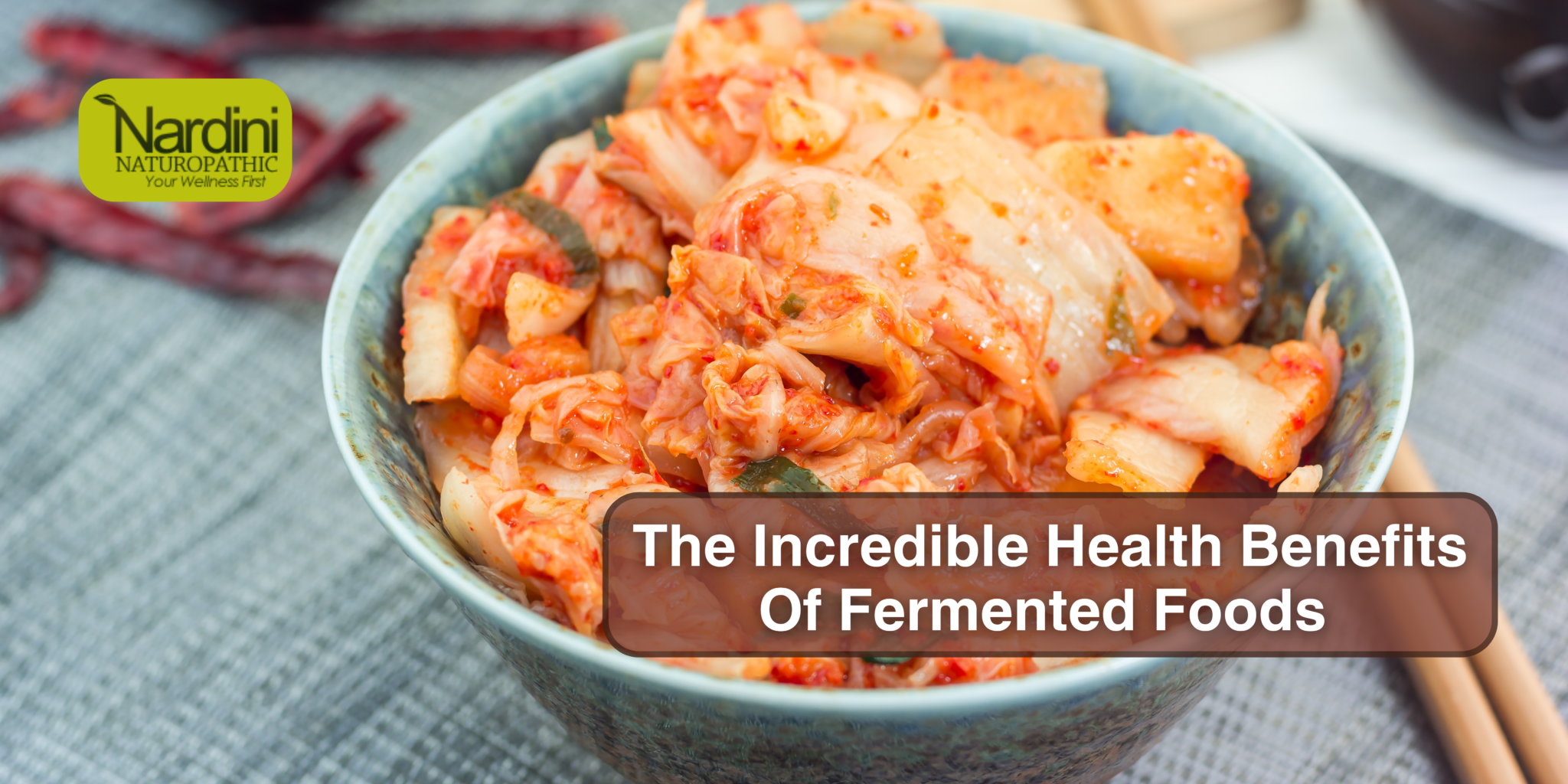
1. Kimchi
To be perfectly honest, kimchi is one of my favourite foods, period.
Kimchi is originally a Korean dish made from salted and fermented vegetables. It commonly contains napa cabbage, radishes, garlic, onion, chili, ginger, and carrots but there’s a wide variety of recipes. It tends to have an orange or red colour and a pungent odour.
It’s made with lactic acid fermenting bacterial species, like Lactobacillus and Leuconostoc8.
Several research studies have demonstrated that kimchi consumption can change the bacterial species profile in the gut.
A Korean study published in 2018 showed that students consuming kimchi preparations over 4 weeks had reduced body fat, improved cholesterol profile, and reduced inflammatory markers9. The study also found that stool samples contained more short-chain fatty acid producing bacteria and fewer potentially harmful species.
This bodes well for kimchi’s potential to improve gut health and reduce chronic inflammation.
2. Kombucha
Originating in China, kombucha is a beverage made from fermented tea. Today, there are many commercial versions of kombucha available that vary widely in their composition and potential health benefits. Yet, it’s not hard to make this one yourself – and it’s fun!
Kombucha is made by adding a multi-microbe culture to black tea and allowing it to ferment sugar, usually for 2 or more weeks. The culture consists of several bacterial (Lactobacillus, Acetobacter, etc.) and yeast (Saccharomyces, etc.) species that together are known as a symbiotic culture of bacteria and yeast (SCOBY)8.
Looking like a large mushroom cap floating in liquid, the SCOBY’s fermentation process in kombucha creates lactic acid and alcohol, the latter of which is then converted to acetic acid (vinegar).
Animal studies have shown benefits to consuming kombucha, including blood sugar improvements, reduction of oxidative stress, and reversal of stomach ulcers10.
A non-controlled study on 24 human subjects with diabetes who consumed kombucha daily for 90 days showed a normalization of blood sugar10. Unfortunately, there are still no randomized, controlled trials studying kombucha’s effects in humans.
In any case, more research should be done to confirm these promising potential health benefits in humans.
3. Miso
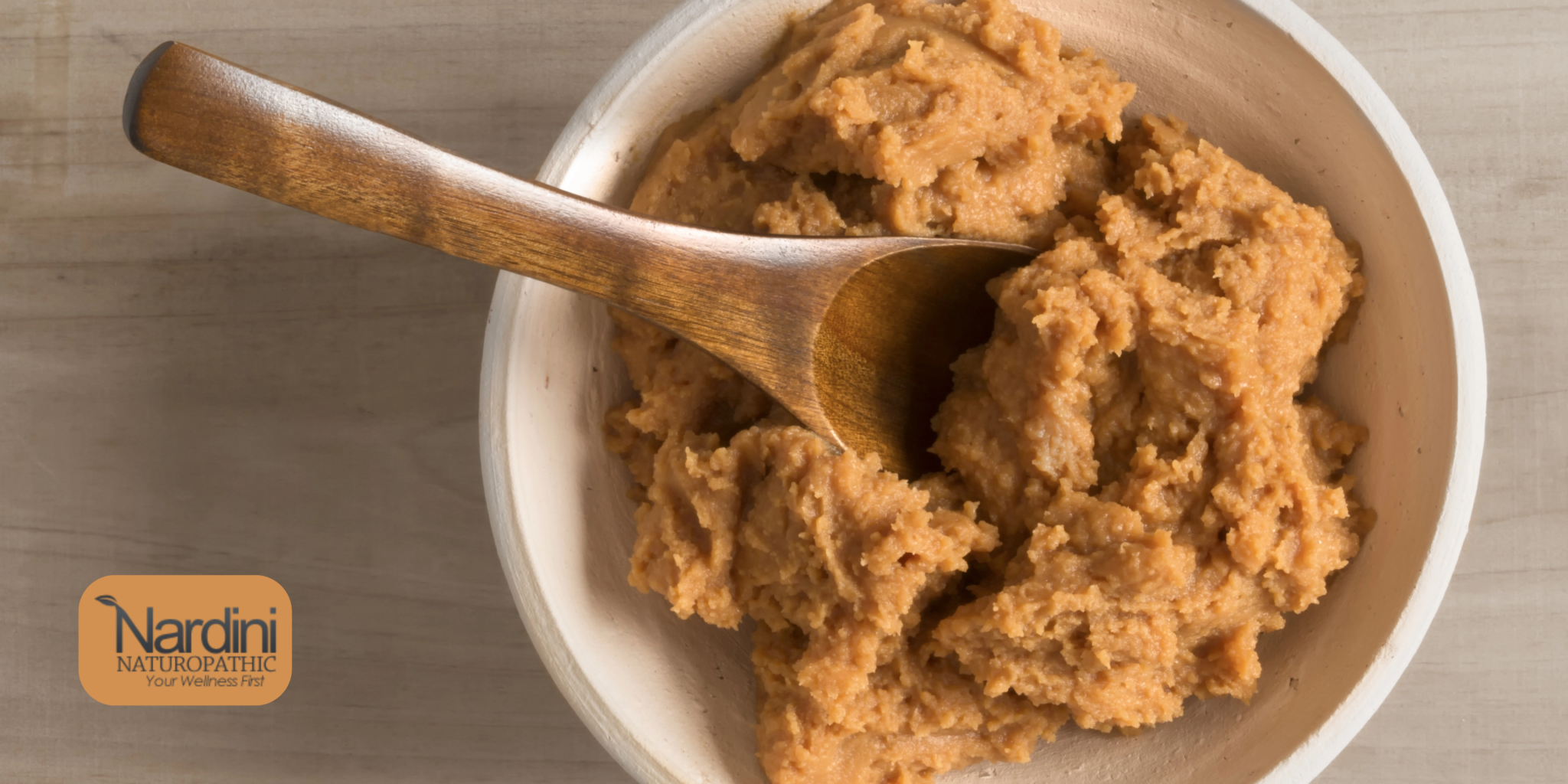
This salty fermented paste made from soybeans originates in Japan and is traditionally used to make miso soup.
The soybeans are fermented using koji mould that contains Aspergillus oryzae or sojae. Sometimes Saccharomyces and lactic acid bacteria are also added to the fermentation mixture8.
Fermentation time, salt content, and other ingredients may vary, but by the end of the process, we’re left with a dark tangy paste ready for use in soups and as a condiment.
It’s postulated that miso may be of benefit for gastrointestinal disorders.
A Japanese team studied the effects of miso soup consumption on human subjects dealing with gastroesophageal reflux disease (GERD). They found that more frequent miso soup intake was associated with lower acid reflux and dyspepsia (indigestion) scores11.
Although these results are promising, more research needs to be done to further evaluate miso for its GI benefits.
4. Sauerkraut
Sauerkraut is a fermented vegetable product with long roots in Germany. In fact, the name itself is German – meaning “sour cabbage” or “sour herb” – although its pronunciation is anglicized in many English-speaking countries.
Like kimchi, sauerkraut is unsurprisingly made using cabbage. Unlike kimchi, sauerkraut generally has a very short ingredient list – shredded cabbage and salt.
In appropriate conditions of temperature and humidity, the cabbage spontaneously ferments by the action of naturally occurring bacteria. Some commercially prepared sauerkrauts use starter cultures of Lactobacillus species to improve the uniformity of the fermentation process.
Sauerkraut has many potential health benefits that are backed up by a fair bit of scientific evidence.
A review of the chemistry of sauerkraut revealed that several beneficial compounds (isothiocyanates, indole-3-carbinol, and nitriles), which may reduce oxidative stress in the body, are present in the end fermentation product12.
A 2010 study done on rats fed sauerkraut, showed an increase in liver- and kidney-detoxifying enzymes, suggesting that this fermented food may be helpful for the body’s detoxification functions13.
There is, of course, the Norwegian study mentioned earlier showing the anti-inflammatory effects of consuming sauerkraut in IBS patients7.
This research demonstrates that sauerkraut holds much promise when it comes to your health.
5. Yogurt and Kefir
Both yogurt and kefir are made by fermenting milk (although other bases, like coconut milk or even water, are sometimes used).
The main difference between them is the microbial cultures used to do this. Yogurt uses specific bacterial strains, like Lactobaccilus to ferment the milk. You make kefir by adding kefir grains, which contain a mixture of bacteria and beneficial yeast, to the milk.
This difference in cultures tends to make yogurt thicker and less runny than kefir. The latter often has a slight fizz to it, making it more suitable as a beverage.
Yogurt is a better source of protein than kefir, while kefir contains higher counts of probiotics.
Because they’re fermented, both yogurt and kefir contain more bioavailable nutrients compared to milk.
In addition to making lactose more digestible, fermentation of dairy milk also breaks the milk proteins down into more digestible peptides and amino acids5.
Studies into the health benefits of yogurt show that it may help those with osteoporosis, diabetes, and cardiovascular diseases14.
Research suggests that kefir may also be useful in the treatment of diabetes as well as chronic inflammatory conditions and high blood pressure15.
It’s hard to go wrong with your health when consuming either of these fermented foods.
Honourable Mentions
My list wouldn’t be complete without mentioning tempeh (from soy), natto (also from soy), and apple cider vinegar (well, from apple cider, of course).
Don’t forget these when you’re considering which fermented foods to include in your diet.
Final Thoughts
Despite all these amazing potential benefits of fermented foods, there are a few cautions to consider.
Some fermented foods, like sauerkraut, can contain high levels of histamine, which may be a trigger for those with allergies6.
Kimchi requires a large amount of salt during its preparation, which may be an issue for those who need to restrict salt in the diet.
Compounds called tyramines, found in fermented foods, may interact with certain medications (monoamine oxidase inhibitors) prescribed for anxiety and depression. If you are taking such medications, check with your prescribing doctor before increasing your consumption of fermented foods.
Of course, if you have an allergy or sensitivity to dairy, be cautious with dairy-containing fermented foods, like yogurt and kefir.
With all this in mind, eating fermented foods still has the potential to take your health to the next level.
The benefits of fermented foods may be even greater if they’re raw, so consider making some of them yourself.
It’s a fun way to stay healthy!
- https://ods.od.nih.gov/factsheets/Probiotics-HealthProfessional/
- https://pmc.ncbi.nlm.nih.gov/articles/PMC4303846/
- https://pmc.ncbi.nlm.nih.gov/articles/PMC5302357/
- https://pmc.ncbi.nlm.nih.gov/articles/PMC4325021/
- https://pmc.ncbi.nlm.nih.gov/articles/PMC12935629/
- https://pmc.ncbi.nlm.nih.gov/articles/PMC9915096/
- https://pubmed.ncbi.nlm.nih.gov/30256365/
- https://pmc.ncbi.nlm.nih.gov/articles/PMC6723656/
- https://www.sciencedirect.com/science/article/abs/pii/S175646461830269X?via%3Dihub
- https://www.sciencedirect.com/science/article/pii/S1047279718307385?via%3Dihub#bib51
- https://www.jstage.jst.go.jp/article/jnsv/64/5/64_367/_pdf/-char/en
- https://pubs.acs.org/jafcau/article-abstract/50/23/6798/3551884/Plant-Derived-Biomolecules-in-Fermented-Cabbage?redirectedFrom=fulltext
- https://www.cambridge.org/core/journals/british-journal-of-nutrition/article/modulation-of-rat-hepatic-and-kidney-phase-ii-enzymes-by-cabbage-juices-comparison-with-the-effects-of-indole3carbinol-and-phenethyl-isothiocyanate/533B49FFB5DE20BC6129D79D5D6D368E
- https://pmc.ncbi.nlm.nih.gov/articles/PMC9455928/
- https://pmc.ncbi.nlm.nih.gov/articles/PMC8226494/
Book An Appointment With Nardini Naturopathic
Are you interested to find out more about how adding fermented foods to your diet may improve your health?
Or perhaps you’d like a review of your overall diet to see where you could be doing better.
Maybe you have food allergies or intolerances and worry you aren’t getting enough nutrients because of your restricted diet.
I’m Dr. Pat Nardini, a naturopathic doctor who offers nutritional counseling services to help ensure all of those gaps in your diet are filled, and that you’re getting enough of all the important nutrients which your body needs to function at its best.
Contact me today for more information, or book a free 15-minute consultation where I will help you understand how naturopathic medicine can help you.
If you have questions about naturopathic medicine, or you’d like to take your first step into the world of naturopathy, contact us at Nardini Naturopathic, and let’s book an appointment.
Yours in health,
Dr. Pat Nardini, Naturopathic Doctor
320 Danforth Ave suite 206,
Toronto, ON, M4K 1N8
-https://g.page/NardiniNaturopathicDanforth
Dr. Pat Nardini, ND is a licensed doctor of naturopathic medicine in Toronto, Ontario. He offers science based natural health solutions with a special focus on thyroid conditions.